Based on an article by Marc Martin – Portugal November 9, 2020 https://www.lisbob.net/en/blog/6-reasons-why-portugal-could-emerge-stronger-from-the-coronavirus-crisis
The health crisis linked to the coronavirus epidemic has not spared Portugal, which is embarking on a second state of emergency. Nevertheless, the predicted disaster seems to have been avoided and Portugal is doing quite well compared to its neighbor Spain. As the lightened state of emergency returns and travel is limited, Portugal begins to prepare for 2021 and the revival of its economy. Even though the months ahead look tough, Portugal could do well in the long term and emerge stronger from the crisis. Of course, the article dwells on the potentially positive aspects and overlooks the immense challenges Portugal will face. Lisbob, the expatriate assistant in Portugal, gives you 6 reasons why Portugal might emerge stronger from the coronavirus crisis.
AGRICULTURE
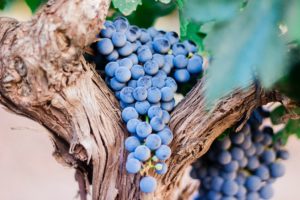
Portugal is a country with great agriculture and a climate conducive to a wide variety of fruits and vegetables: pears, cherries, apples, grapes, bananas (Madeira), tomatoes and even rice. Even though organic is not a widespread norm, Portuguese agriculture is very healthy and has nothing to do with intensive farming: there is still a lot to be developed in this sector. Precisely, the coronavirus crisis could force some countries to supply more locally, and this would allow Portugal to develop its agriculture while maintaining the quality of its operations.
PAPER
This has not escaped you, a good part of the world population was afraid of running out of toilet paper at the start of confinement. This excessive demand has created a temporary shortage on these products. Portugal will never be in shortage of toilet paper and paper towel: it produces enormous quantities of paper of all kinds and the company Renova is one of the world leaders. The coronavirus crisis will surely encourage European buyers to source more locally and Portugal is well-positioned to take advantage of this new situation.
GREEN TOURISM
The coronavirus crisis is also changing awareness on several points, including the impact of humans on the planet. Mass tourism will be hard to recover for a long time, and long trips to the other side of the world will be less and less popular. It’s local time for green tourism, and Portugal is already far ahead of it. Indeed, Portugal had been voted European green destination, and the variety of green destinations inside Portugal make it a favorite in green and eco-responsible tourism.
TEXTILE
Portugal is renowned for its textile industry, which is both qualified and fairly inexpensive. However, Made in Portugal is struggling to sell internationally despite the quality of its products. However, the coronavirus epidemic has had the positive that it has shown Portuguese responsiveness and engineering in the creation of masks in particular. Millions of Portuguese residents have already received their masks in their mailboxes. The coronavirus crisis, as with paper, will force buyers to source locally rather than halfway around the world, and the Portuguese textile industry is just waiting for that to finally become obvious.
REAL ESTATE
Before the coronavirus crisis, soaring real estate prices in Portugal had peaked as never seen before. This covid-19 epidemic will nevertheless put a brake on mass tourism, if only temporarily, and will encourage many owners to turn to long-term rental. This will benefit residents who will find it easier to find accommodation and also city centers which will recover local shops. Even if a property crash seems excluded, a slight price correction can be considered.
RESISTANCE
In a country which experienced and freed itself from the dictatorship of Salazar until the 1970s, which defeated the Napoleonic troops and which survived the earthquake of 1755, the coronavirus is only a passing obstacle with the more than millennial history of Portugal.
Rounding up, being patient and helping each other, the Portuguese know how to do it and they are resistant people. There is no doubt that Portugal will have a bad time like they have had many worse times.
Based on an article by Marc Martin – Portugal November 9, 2020 https://www.lisbob.net/en/blog/6-reasons-why-portugal-could-emerge-stronger-from-the-coronavirus-crisis
Portugal is attracting more and more foreign pensioners who decide to live happy days away from their country of origin. Also, many Portuguese or Luso-descendants who return to their country to retire there. Although each decision has its own reasons, Portugal benefits from several assets that make the country a landmark destination for retirement. Cost of living, security, weather, each retiree will have his own reasons for having decided to retire in Portugal. In order to help you in your decision and remaining as objective as possible, we have listed for you the best reasons to live your retirement in Portugal. Lisbob, the expatriate assistant in Portugal, tells you all about the 10 good reasons to retire in Portugal.
Portugal is attracting more and more foreign pensioners who decide to live happy days away from their country of origin. Also, many Portuguese or Luso-descendants who return to their country to retire there. Although each decision has its own reasons, Portugal benefits from several assets that make the country a landmark destination for retirement. Cost of living, security, weather, each retiree will have his own reasons for having decided to retire in Portugal. In order to help you in your decision and remaining as objective as possible, we have listed for you the best reasons to live your retirement in Portugal. Lisbob, the expatriate assistant in Portugal, tells you all about the 10 good reasons to retire in Portugal.
1. Weather
Portugal enjoys a mostly sunny and rather mild weather in winter. Nevertheless, do not believe on the word the ominous birds who promise you 320 days of suns a year and winters at 20 degrees. It will already depend on where you live. The north is rainy and wet, the Algarve rather hot and dry. Nevertheless, this is where Portugal’s strength lies: the diversity of climates and landscapes that the country offers. Of course, winter in Porto will be less rigorous than Charleville-Mezieres, but it will take into account the insulation of housing. Be that as it may, the weather is an essential criterion when choosing your expatriation and Portugal allows any retiree to choose the place where he will feel the best.
2. Safety
This is one of the most important criteria when choosing your country of expatriation to retire, the feeling of security. And on this point, we can say that Portugal is part of the world top in terms of living together and security. Indeed, the country is often cited in the rankings of countries where it is good to live in terms of security. Any expatriate in Portugal will tell you: it is rare to see an aggression and even less to be attacked. Women can walk quietly in the street without worry and assaults are rare. Of course, we must be careful as everywhere else, but Portugal is a country where life is good and where “dangerous” places are less present than in other countries.
3. Cost of Life
Portugal is a country with a cost of living that is lower than in other countries like France or Germany. The foreigners who come to Lisbon will be pleasantly surprised to pay their coffee 50 cents on the terrace of a European capital, or even to have lunch for less than 10 euros with full menu. In addition, some products such as tobacco or alcohol are cheaper. Be careful however, the cost of living in Portugal is sometimes much higher than in other European countries for some products. For example, hygiene or household products cost almost twice as much (!) as in UK for example, and electronic products and appliances, such as mobile phones or computers, cost on average 15 to 20% more expensive. The reasons: a 23% VAT and a geographical position at the far end of the continent, implying higher transport costs for imported products. Each retiree will have to take stock of these expenses and see if his lifestyle allows him to live better with so much.
4 Hospitality
The Portuguese are known and well-known for warmly welcoming foreigners who decide to settle there. One of the reasons for this is surely the millennial history of the Portuguese, people of explorers and emigrants who settled in the four corners of the world. The Portuguese know how to integrate as well as to welcome other retirees from all over the world. All you have to do is ask for directions, even if you speak a beginner Portuguese, and you will see how warmly and kindly the Portuguese will try to help you. Unfortunately, the flip side is that there is sometimes a bad intention behind all these nice touches. Of course, we do not put everyone in the same basket, far from it, but it would be a lie to say that all Portuguese are nice by good intention. Many are the scams and traps for strangers who, a little naive and gullible (we have all been), are having to think that everything is pink. No, buying real estate, cars or even simple jobs can turn into a well-crafted scam without any recourse.
5. Landscapes
When you look at Portugal for the first time, you are surprised by the diversity that this relatively small country offers. Indeed, Portugal, 6 times smaller than France, is full of landscapes and regions all different and interesting from each other. For pensioners, Portugal is simply an inexhaustible source of landscapes all more beautiful than the others. The northern, more humid and mountainous, offers green natural parks and exceptional views, as in Geres. The Douro Valley, world heritage, allows you to admire the vines carved for centuries and the valleys shaped by the Portuguese. The Algarve, known for its beautiful and wild beaches, will delight lovers of sunsets, while the Serra da Estrella massif will allow you to ski on natural snow.
6. Culture
Portugal is a country full of cultural activities, some of which are world famous. As a retiree, the cultural offer is one of the criteria to be taken into account. Museums, galleries, festivals, concerts: Portugal has a rich and diverse culture, fruit of its influences from all over the world and its past made of discoveries but also bad times. Fado is the most accomplished expression, but the style may not please. Nevertheless, in the 21st century Portugal has developed its offer and showcased its cultural heritage. The neighborhood of Belém in Lisbon offers many museums and monuments to visit, and the cultural agenda is full throughout the year. When you retire in Portugal, you will not be bored.
7. Food and Gastronomy
Eating well is important, and even if tastes and colors are not discussed, Portuguese cuisine is known to be hearty and quality. Fresh vegetables and local, rice pushed in Alentejo, fish galore, many are the assets of the gastronomy of Portugal. If you take the time to spend your retirement, you will have plenty of time to discover the incredible amount of dishes that make up the Portuguese cuisine. Also, Portugal has imported and adapted dishes and ingredients from its ancient conquests from different continents: African, Asian or South American cuisine invites itself to Portuguese dishes for our greatest pleasure. It should be noted that the Portuguese have a habit of eating rather fat, and they do not skimp on the amount of oil.
8. Health
The Portuguese are known to have a good life expectancy, and retired foreigners who decide to spend their retirement know it well. This is due in particular to the fact that their diet is recognized as good for the health, but also thanks to the Portuguese health system. In fact, Portugal’s doctors and medical specialists are among the best trained and most professional in Europe. Universities where future doctors and surgeons are studying are famous all over the world. To put it simply, do not worry about the quality of the health professionals you will find in Portugal. Nevertheless, the Portuguese public health system is in very bad shape. The crisis has gone by, and the fact that it is almost entirely free means that available resources are limited. A situation that is deteriorating little by little, pushing users to turn to the private sector.
9. Real Estate
Even if the “golden age” of cheap real estate anywhere in Portugal is over, it would be lying to say that Portugal does not yet offer fantastic real estate opportunities. In fact, Portuguese property prices remain on average lower compared to other European countries. Lisbon and Porto may now be at levels of other European capitals, but Portugal is big and offers many beautiful places and unbeatable prices. Any pensioner will find his happiness, even more if he wants to get away from tourist areas. A big flat, though. With the popularity of recent years, many are the real estate agents who have started to flourish in Portugal, and not often the most honest. If you do not master the Portuguese language and its subtleties in terms of the law, we strongly advise you to be accompanied by a lawyer or a notary. Also, going through a known and reputable agency can be a guarantee of quality. You can go through our free real estate search service to help you.
10. Tax System
This last point will not please everyone. Portugal, since 2012, proposes a tax status called NHR for non-habitual resident. This status allows under certain conditions to obtain a total exemption from taxation on private pension income for a period of 10 years. Yes, a decade without IRS. So of course, this only concerns private sector pensions, and you should not have been resident in Portugal for the 5 years preceding the application for the famous NHR status. Nevertheless, this tax boost is often the icing on the cake, the reason that tipped the decision to retire in Portugal. Be careful, however, because the NHR status should not be or become the sole reason that drives you to live your retirement in Portugal, because you could be disappointed. Portugal is much more than a simple tax exemption on its pensions, and many are expatriates who have left Portugal because they are dissatisfied with other points. While this status is advantageous for pensioners who decide to settle there, it should not be forgotten that this measure remains marginal (less than 30,000 beneficiaries over 10 years) and is not very well received by Portuguese retirees.
Reposted from https://www.formula1.com/ 23 – 25 October by staff writer.
23 October 2020
Mercedes
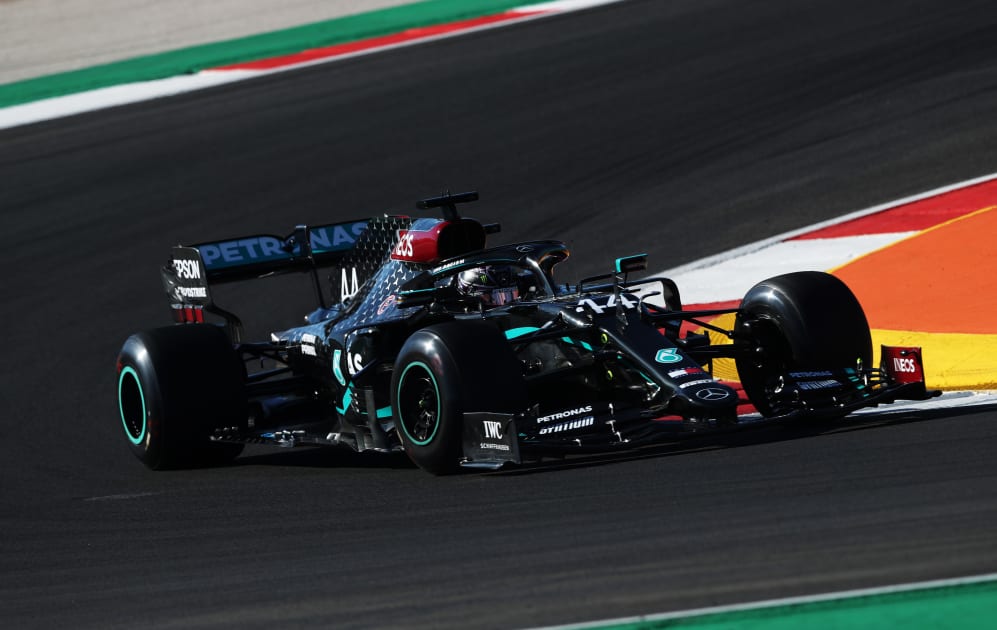
A smooth day on one side of the garage, as Bottas continued his fine run of Friday form with a P1 in both sessions. The Finn looked comfortable around the new track from the get-go and will be brimming with confidence heading into tomorrow. As for his team mate, Hamilton struggled slightly by comparison as his flying laps on the soft tyre were marred by traffic and red flags. With both cars suffering from graining, it will be interesting to see if DAS can make a difference when it is bolted back onto the cars tomorrow.
Lewis Hamilton – FP1: 1:18.749, P2; FP2: 1:19.308, P8
“The elevation changes on this track are incredible. There’s a lot of places where you just can’t see where you are going, so that’s very challenging and the surface is also very smooth. I think track conditions didn’t change that much throughout the day. The wind picked up, and I don’t know if it changed direction, but it made it tricky out there. Unfortunately we ended up sitting in the garage for much longer than we’d hoped for with the two red flags in FP2. I think FP1 was the better session for me, even though the car didn’t feel that great. We then made some changes, and it felt quite bad in FP2, so we need to take a few steps back and figure out where we went wrong with the set-up and see if we can improve tomorrow. Looking ahead, it is not going to get any easier to get a clear gap out there on the track, because it is really tough to get the tyres in the right window for the first lap here, even with the soft, which is actually pretty hard for a soft compound. Q1 will be exciting, with a lot of cars out there, it’s going to be a dog fight to get a clear position and get a time in. But that’s what we do and everyone is in the same boat!”
“It’s been a good day today. The sun was shining, this is a great track for driving; it could definitely be worse! It was quite slippery out on track, it reminded me a lot of when we went to Sochi or Austin for the first time, and we drove on the new tarmac there. This type of tarmac is tricky in terms of getting grip. Once you lose the grip, you can drop the car quite quickly, and I think that’s the reason why we have seen so many spins today. The track was evolving lap by lap, and it got better throughout the day, but maybe it was reset slightly in between the two sessions, and with red flags in second practice there wasn’t that much useful running. So, I’m still expecting an increase in grip over the rest of the weekend. The balance of the car was also pretty good. I was mainly struggling in the slow speed corners with the rear end of the car but it is not too far away from where I want it, as the lap times would also suggest. But as always, there will be more work to do tomorrow.”
Andrew Shovlin, Trackside Engineering Director
“We had a reasonable morning but a messy afternoon with the red flags, although that’s probably the same story up and down the grid. The circuit is really good with some challenging corners and the car seems reasonably quick but the balance isn’t great. The tyres are quite hard here so getting the single lap isn’t easy and the warm-up all day has been a real challenge but hopefully that will improve as the track grips improves. We did a lot of laps in the afternoon but a good chunk of the mileage was the Pirelli tyre test, which doesn’t generate useful information for us and then the timing of the red flags meant we couldn’t complete the long run work on the race tyres. Valtteri got a pretty good low fuel lap in before the red flags but Lewis couldn’t extract the same grip so there’s something for us to understand there. In terms of the long runs it looks like the midfield cars are a bit closer than normal which also suggests we’re not quite in the right window yet. Normally we have a car that is easy to balance and we’re not in that position right now, but we’ll work hard to try and get on top of a few of those issues before tomorrow.”
PORTIMAO, PORTUGAL – OCTOBER 23: Valtteri Bottas of Finland driving the (77) Mercedes AMG Petronas F1 Team Mercedes W11 on track during practice ahead of the F1 Grand Prix of Portugal at Autodromo Internacional do Algarve on October 23, 2020 in Portimao, Portugal. (Photo by Rafael Marchante – Pool/Getty Images)
PORTIMAO, PORTUGAL – OCTOBER 23: Valtteri Bottas of Finland driving the (77) Mercedes AMG Petronas F1 Team Mercedes W11 on track during practice ahead of the F1 Grand Prix of Portugal at Autodromo Internacional do Algarve on October 23, 2020 in Portimao, Portugal. (Photo by Rafael Marchante – Pool/Getty Images)
Red Bull
Verstappen was the first to fall foul of the Portimao track, spinning in FP1 while gathering aero data for the team. He emerged unscathed from that one, but not so from a bigger incident in FP2. Trying to dive down the inside into Turn 1 to overtake the Racing Point of Stroll, the two collided, bringing out the red flags. Verstappen was able to continue once the session restarted, with the damage fortunately minimal. That crash scuppered his team mate, though, who lost his flying run and thus didn’t set a fully representative lap time on the softs.
Max Verstappen – FP1: 1:19.191, P3; FP2: 1:18.535, P2
“It was quite tricky out there and the new tarmac seems slippery with only one proper line to use as you lose a lot of grip if you run wide. The wind also picked up in the afternoon but overall I think we improved the car from FP1 to FP2 so it all felt a little bit nicer to drive. We will keep trying to improve even further as there are still things we can do better around here. It was interesting to try two new compounds of Pirelli tyres. We don’t know what they were but one set felt a bit better than the other but they both felt nice. I’m not sure if they are faster than what we usually use but I don’t have anything negative to say. It is difficult to say if we can fight Mercedes this weekend as they look very quick but never say never and we always try our best and see where we are tomorrow.”
Alex Albon – FP1: 1:19.365, P5; FP2: 1:19.643, P10
“The track is fun but it was a bit like an ice rink with the lack of grip and increasing wind. With the track temperature dropping and the wind picking up the track didn’t really rubber in throughout the day so I actually felt better in FP1 than in FP2. It’s a new challenge which makes it interesting and I’m sure with another Free Practice session tomorrow the track will feel better for qualifying. It’s hard to know where we really are after today and you can see the difference in times throughout the rest of the field is very erratic which I think is just down to the changing wind conditions each run, so we’ll know more tomorrow on where everyone stands.”
PORTIMAO, PORTUGAL – OCTOBER 23: Alexander Albon of Thailand driving the (23) Aston Martin Red Bull Racing RB16 on track during practice ahead of the F1 Grand Prix of Portugal at Autodromo Internacional do Algarve on October 23, 2020 in Portimao, Portugal. (Photo by Joe Portlock/Getty Images)
PORTIMAO, PORTUGAL – OCTOBER 23: Alexander Albon of Thailand driving the (23) Aston Martin Red Bull Racing RB16 on track during practice ahead of the F1 Grand Prix of Portugal at Autodromo Internacional do Algarve on October 23, 2020 in Portimao, Portugal. (Photo by Joe Portlock/Getty Images)
Ferrari
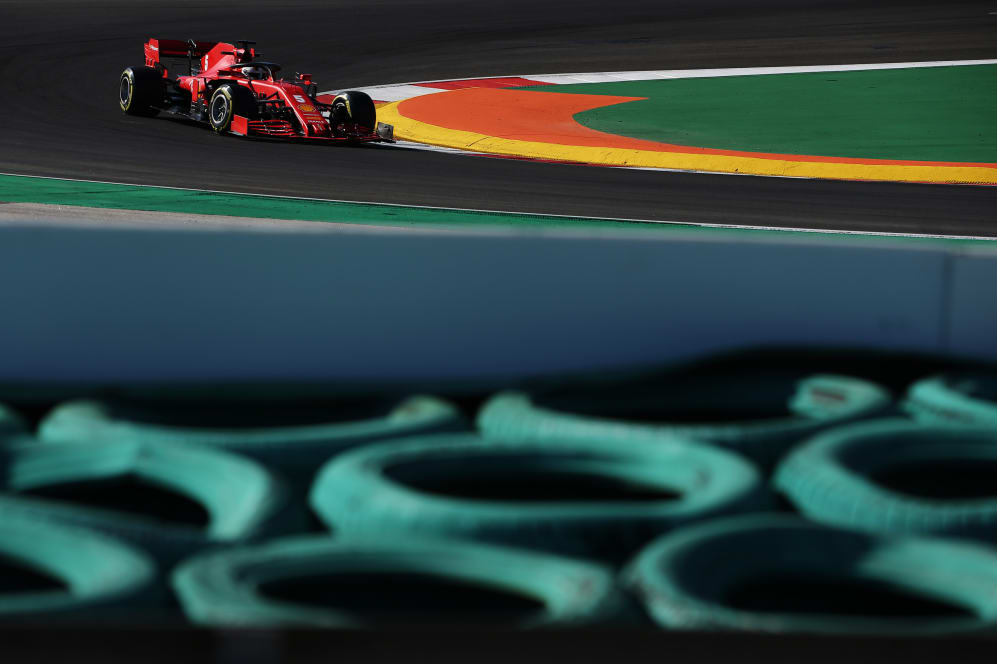
Ferrari seem to have rediscovered their form, with Leclerc in particular shining for the Scuderia. He finished in the top four in both sessions and looked comfortable on all three tyre compounds as the new upgrades seemed to pay dividends. Vettel couldn’t quite match his team mate for pace but he too looked an improved figure today, despite locking up and having to take avoiding action after coming across a slow-moving Williams.
Sebastian Vettel – FP1: 1:20.200, P11; FP2: 1:19.175, P6
“Today the track was a big but very interesting challenge for everybody. At the beginning it was very slippery, mostly because of the resurfacing, but it is very smooth. It was my very first day and I liked it. It’s good that we have plenty of tracks that are exciting. I think tomorrow will be better as the track itself will improve and we will know it better.
“It’s a bit difficult to say how competitive we were in the afternoon session, because not all the drivers tried a qualifying lap. Today, what everybody needed was more running to get into a rhythm. The car felt a bit nervous, partly due to the elevation changes, but I suppose that is the same for everyone. We will see the true picture tomorrow.”
Charles Leclerc – FP1: 1:19.309, P4; FP2: 1:18.838, P4
“This track is amazing! It took quite a few laps to find the flow, because you don’t really see any apexes but once you get into the rhythm, it’s really good. The circuit is also extremely slippery and the rear of the car is moving everywhere but I think that makes it even better in terms of fun! The grip level didn’t improve much throughout the sessions, which should make for an exciting race.
“Today looked quite good for us and, mainly on the qualifying side, it was fairly promising. Let’s wait and see though, as we haven’t had much high-fuel running with normal tyres, as we did some with the prototype-tyres instead. Running with high fuel was actually our weakness at the last race, so it’ll be a bit of a surprise on Sunday and we’ll see where we are.”
PORTIMAO, PORTUGAL – OCTOBER 23: Charles Leclerc of Monaco driving the (16) Scuderia Ferrari SF1000 on track during practice ahead of the F1 Grand Prix of Portugal at Autodromo Internacional do Algarve on October 23, 2020 in Portimao, Portugal. (Photo by Dan Istitene – Formula 1/Formula 1 via Getty Images)
PORTIMAO, PORTUGAL – OCTOBER 23: Charles Leclerc of Monaco driving the (16) Scuderia Ferrari SF1000 on track during practice ahead of the F1 Grand Prix of Portugal at Autodromo Internacional do Algarve on October 23, 2020 in Portimao, Portugal. (Photo by Dan Istitene – Formula 1/Formula 1 via Getty Images)
McLaren
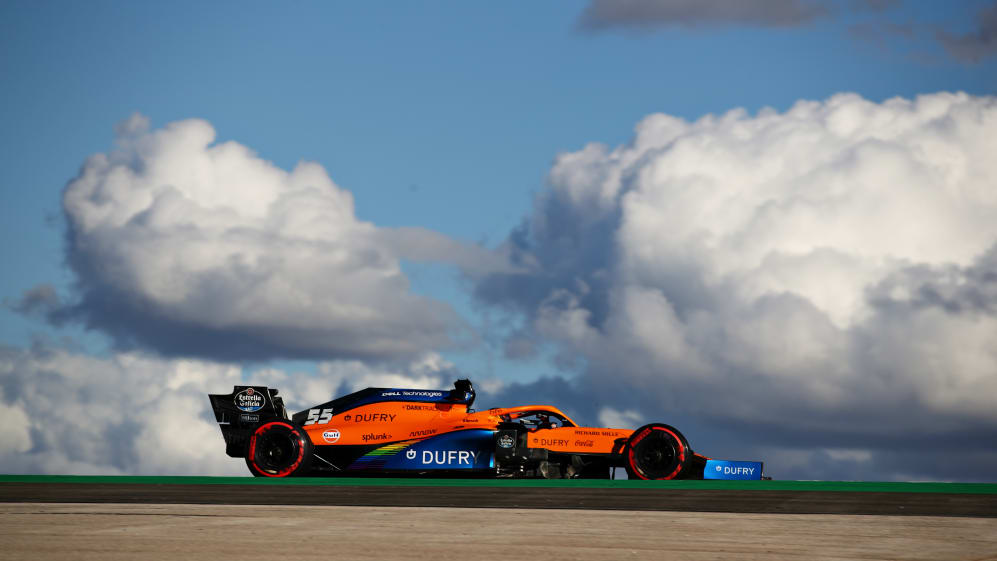
A late flying lap from Norris propelled him up the leaderboard in FP2 to a very eye-catching third, with his team mate not that far behind. Does this track suit the MCL35? Based on Friday’s running they certainly have cause to be confident, which bodes well given they need a big result to reignite their constructors’ championship campaign. The team haven’t scored double points since Monza, something they are looking to put right this weekend.
Carlos Sainz – FP1: 1:19.441, P6; FP2: 1:19.113, P5
“I think it’s been a challenging Friday out there, for everyone. A track with very low grip, and the wind picking up in the afternoon made things even more tricky.
“We managed to finish the session fairly high up on the standings without particularly clean runs or clean laps. That means everyone has a very large margin for improvement going into Saturday. We still need to improve the car quite a bit overnight and make sure we get it in the right window for tomorrow.”
Lando Norris – FP1: 1:20.207, P12; FP2: 1:18.743, P3
“The tarmac and temperatures here make it quite tricky to get everything in the right window, which makes the car balance quite tricky as well. It’s been very difficult to put a lap together, due to the disrupted sessions with the red flags and traffic at such a short circuit. Those factors, in combination, have made it a very difficult day to achieve a good balance.
“We ended up in a good position, but I think we’re a long way from that in terms of actual pace. So, we’ve got a lot of work to do tonight to see how we can improve for tomorrow.”
James Key, Technical Director
“It’s nice to come to another new circuit. Portimão is a great track and a genuine technical challenge with the variations of corner type and elevation, so there’s been a lot to learn today. We’ve been able to do our homework, including the running we did for the Pirelli tyre test, which added some useful laps for everyone.
“We had some test items on the car today and we’ll have to analyse the data from those this evening, but early indications are positive. The car seemed reasonably stable and well set-up from the start, despite the difficult grip conditions, which is a credit to the work put in by the race team here and the various groups back at the factory. There’s still work to do overnight and tomorrow morning but, overall, it’s been a productive and useful day.”
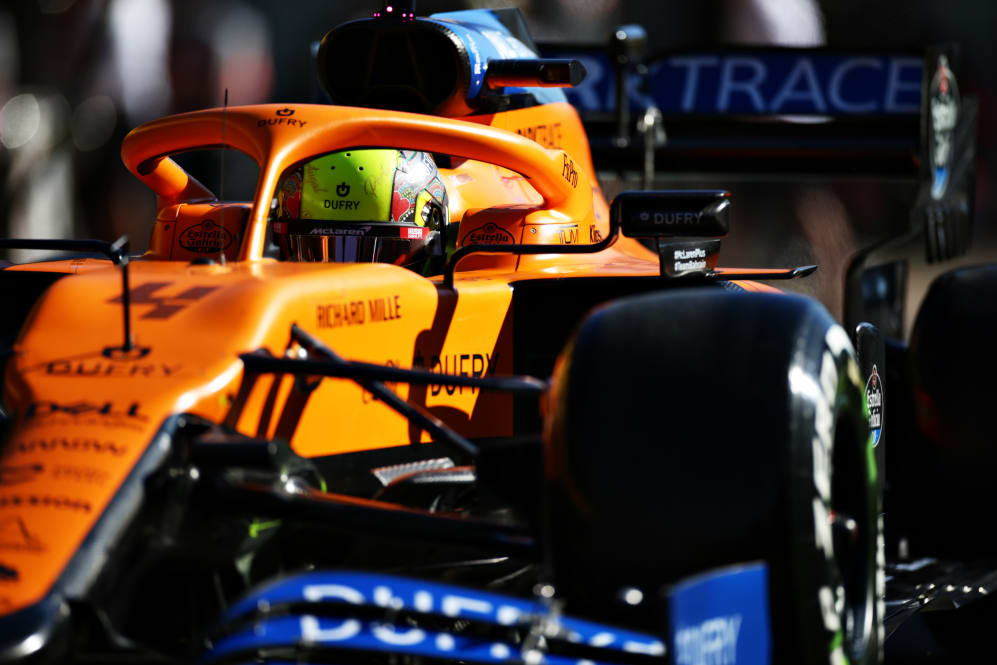
PORTIMAO, PORTUGAL – OCTOBER 23: Carlos Sainz of Spain driving the (55) McLaren F1 Team MCL35 Renault during practice ahead of the F1 Grand Prix of Portugal at Autodromo Internacional do Algarve on October 23, 2020 in Portimao, Portugal. (Photo by Bryn Lennon – Formula 1/Formula 1 via Getty Images)
PORTIMAO, PORTUGAL – OCTOBER 23: Carlos Sainz of Spain driving the (55) McLaren F1 Team MCL35 Renault during practice ahead of the F1 Grand Prix of Portugal at Autodromo Internacional do Algarve on October 23, 2020 in Portimao, Portugal. (Photo by Bryn Lennon – Formula 1/Formula 1 via Getty Images)
Racing Point
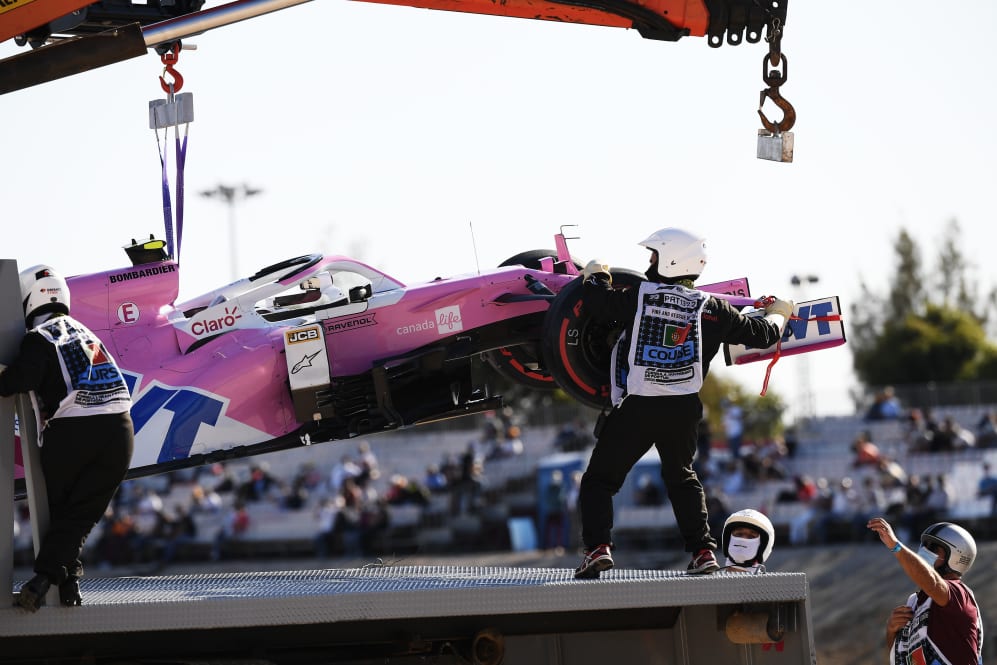
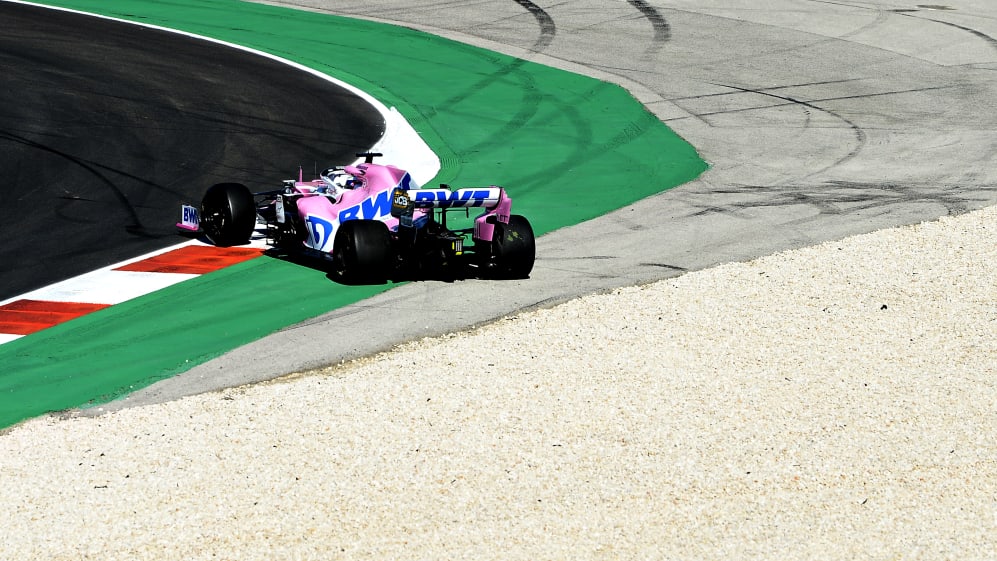
Perez went for a couple of spins as he explored the grip levels at this newly resurfaced track, but looked quick and comfortable for the majority of the sessions. Stroll’s return to racing wasn’t as smooth as he might have hoped, though, as he had to watch his car being returned to the pits on the back of a low-loader after crashing into Verstappen in Turn 1. The Canadian was ahead but turned in on the RB16, with the stewards investigating and deciding to take no further action.
“It’s been a real challenge out there today and we need to improve the balance before qualifying. Hopefully, we can go away and make some progress tonight. I think we’ve already seen that this is going to be a very different type of race this weekend. The surface is very low grip and it didn’t really improve from FP1 into FP2, so I wouldn’t expect too much track evolution. It’s a challenging circuit and I believe you’ll see some teams and drivers look quick on Saturday and then struggle on Sunday, and vice versa. It will be about making the right compromises to perform strongly across Saturday and Sunday. It’s all to play for and I’m confident we can be in the mix for good points on Sunday.”
“It was a tricky day because it wasn’t an easy track and it was very low grip. All the drivers were struggling out there. We know where we need to improve in terms of the balance of the car, so we’ll go away and brainstorm overnight and come back with some ideas to be stronger tomorrow. It’s a great circuit and the layout is a lot of fun – I just wish it had some more grip! But on the other side, that means it’s a challenge to drive and mistakes will be punished, so that makes it a really exciting watch for the fans. The incident with Max was unfortunate. We’ve spoken and cleared the air, though. I don’t think Max was expecting me to go for a second push lap and likewise I wasn’t expecting anyone to be alongside me into Turn 1. As he had let me through on the last corner of the previous lap, I thought he would drop into the gap, but he didn’t and we ended up coming together when neither of us expected it. It’s been cleared by the stewards and we can draw a line under it and move on.”
PORTIMAO, PORTUGAL – OCTOBER 23: Sergio Perez of Mexico driving the (11) Racing Point RP20 Mercedes spins during practice ahead of the F1 Grand Prix of Portugal at Autodromo Internacional do Algarve on October 23, 2020 in Portimao, Portugal. (Photo by Octavio Passos – Formula 1/Formula 1 via Getty Images)
PORTIMAO, PORTUGAL – OCTOBER 23: Sergio Perez of Mexico driving the (11) Racing Point RP20 Mercedes spins during practice ahead of the F1 Grand Prix of Portugal at Autodromo Internacional do Algarve on October 23, 2020 in Portimao, Portugal. (Photo by Octavio Passos – Formula 1/Formula 1 via Getty Images)
AlphaTauri
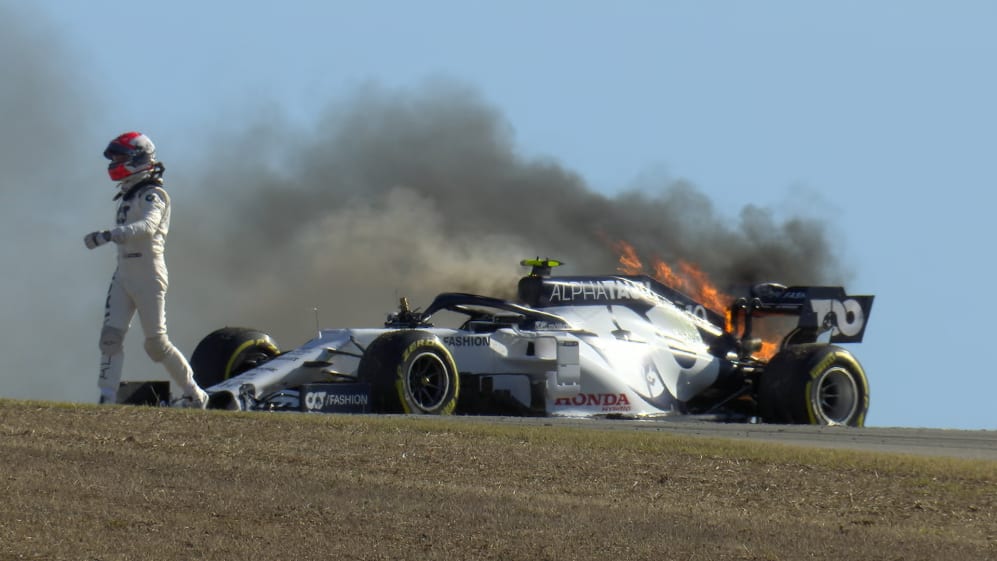
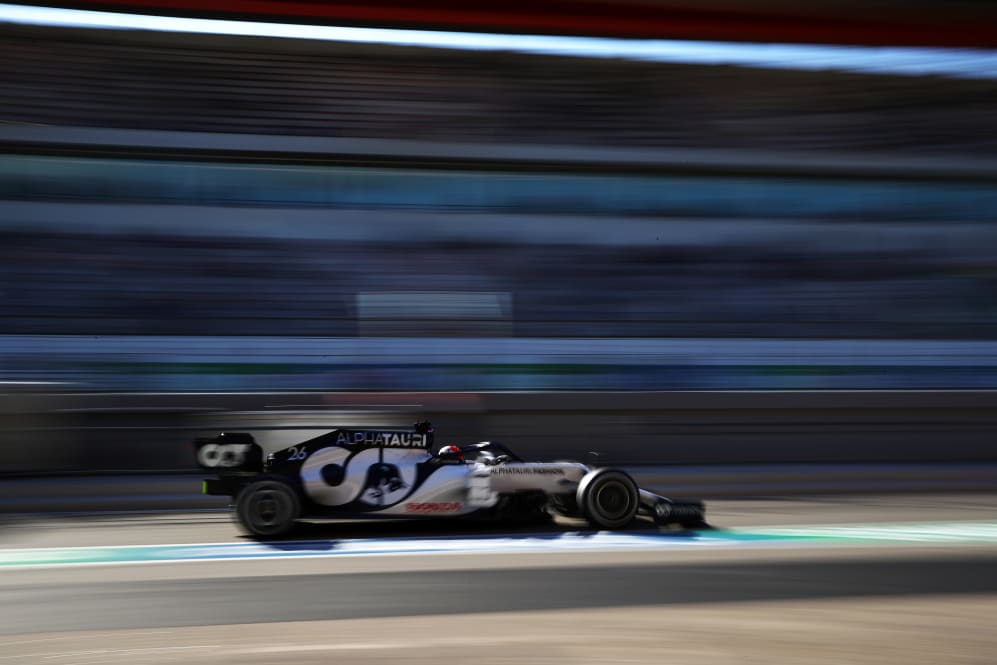
Gasly looked quick when on track, but both his sessions were undone by mechanical woes. He was called in with an undisclosed ‘issue’ in FP1 which didn’t derail his session too badly, but roll on FP2 and worse was to come. His AT01 had to be parked trackside with flames pouring from the rear as he made a sharpish exit from the cockpit, and it remains to be seen how much of that car will need to be changed and what penalties could result. As for Kvyat, a couple of spins aside, he at least had the better of the reliability luck but needs to find a few tenths if he is to challenge for the top 10 tomorrow.
Pierre Gasly – FP1: 1:20.124, P10; FP2: 1:19.178, P7
“It wasn’t an ideal Friday in Portimao. I discovered the track this morning in FP1 and I have to say it’s quite cool to drive, the elevation makes it really enjoyable. Unfortunately, in FP2 we had an issue where the car caught fire, so we are still analysing to understand the reason why this happened. This meant we didn’t have time to do a run on soft tyres, which would have been good to see where we sit compared to the others in the short runs. Our performance seems quite decent so far, but on my side, I still do not feel fully happy with the car and I hope we can improve for tomorrow. It will be important to have a clean FP3 to be prepared for Qualifying and to be able to put ourselves in a good starting position for Sunday.”
“It was very hard to get into a rhythm in FP2 so there are a few things that are still unclear and will just have to analyse what we have. At the moment nothing feels really good, but that’s normal because the track is still very slippery, so we have to work on a few things before tomorrow to understand what works best for these conditions. It wasn’t as enjoyable driving today because there’s so little grip out there, the car slides quite a bit so it’s going to be a different challenge for us. We will have to tweak a few things on the car to understand the right balance for this track.”
Jonathan Eddolls, Chief Race Engineer
“Although Formula 1 tested here back in 2009, effectively, Portimao is a new track for us. The surface has been completely resurfaced recently and, as we have seen in the past with fresh tarmac, it generally starts very slippery and low grip. This, combined with a more conservative tyre compound choice than other events of the season, and the wind intensity, meant it was hard for the drivers to get into a good rhythm during the session. All teams ran the Base tyre at the start of FP1 to remove this additional set from their allocation. The priority of the session for us was to give Pierre and Daniil a lot of track time to learn the circuit, complete some aero tests and characterisation, and begin setup optimisation for the track. The balance was hard to read in the low grip conditions, but the competitiveness was promising.
“We had a slow puncture on Pierre’s second set so he couldn’t complete the long run at the end of the session, which was unfortunate as we now miss the tyre data on that compound.
“For FP2, we made various changes to the car to improve the balance and overall grip. The first 30 minutes were dedicated to Pirelli tyre testing, which is effectively blind for us but helps with their 2021 development.
“After that, we started our planned performance runs, but unfortunately for Pierre, during the first new tyre lap his car had a ‘blackout’ and subsequent fire, so we need to review the issue when the car is back in the garage. After the Red Flag period to clear Pierre’s car, Daniil went for his new Option tyre run but had to abort due to the second Red Flag for the incident in Turn 1. Upon restarting the session, the temperatures were not ready and others were on high fuel, which made it difficult for Daniil to set a good lap. This means the classification today is not fully representative. We have a lot to look through tonight and are lacking long run tyre data, so it could make for an interesting race on Sunday.”
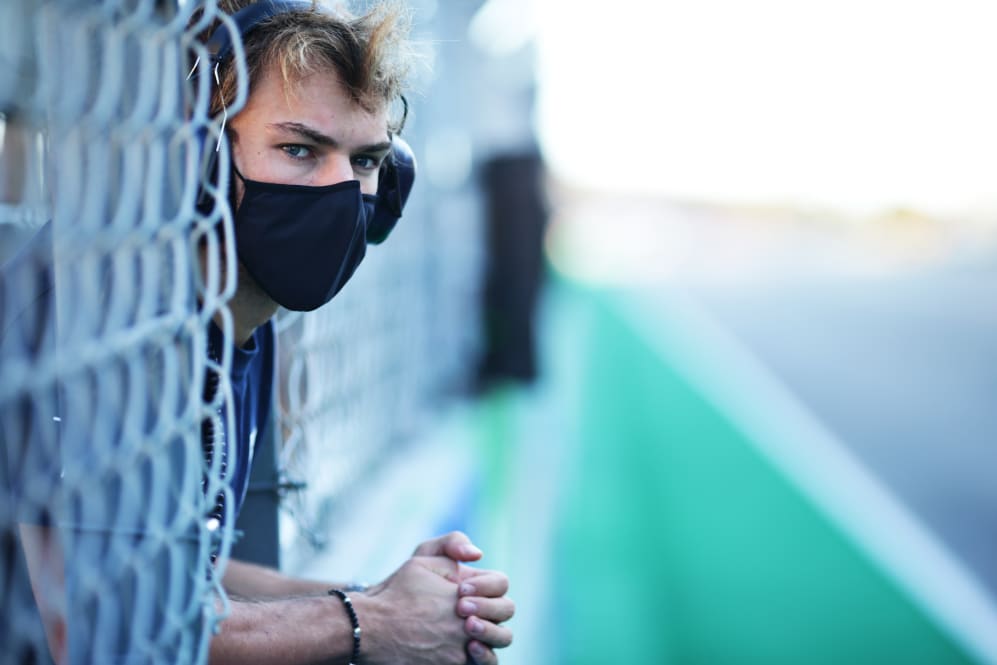
PORTIMAO, PORTUGAL – OCTOBER 23: Pierre Gasly of France and Scuderia AlphaTauri looks on from the pitwall during practice ahead of the F1 Grand Prix of Portugal at Autodromo Internacional do Algarve on October 23, 2020 in Portimao, Portugal. (Photo by Peter Fox/Getty Images)
PORTIMAO, PORTUGAL – OCTOBER 23: Pierre Gasly of France and Scuderia AlphaTauri looks on from the pitwall during practice ahead of the F1 Grand Prix of Portugal at Autodromo Internacional do Algarve on October 23, 2020 in Portimao, Portugal. (Photo by Peter Fox/Getty Images)
Renault
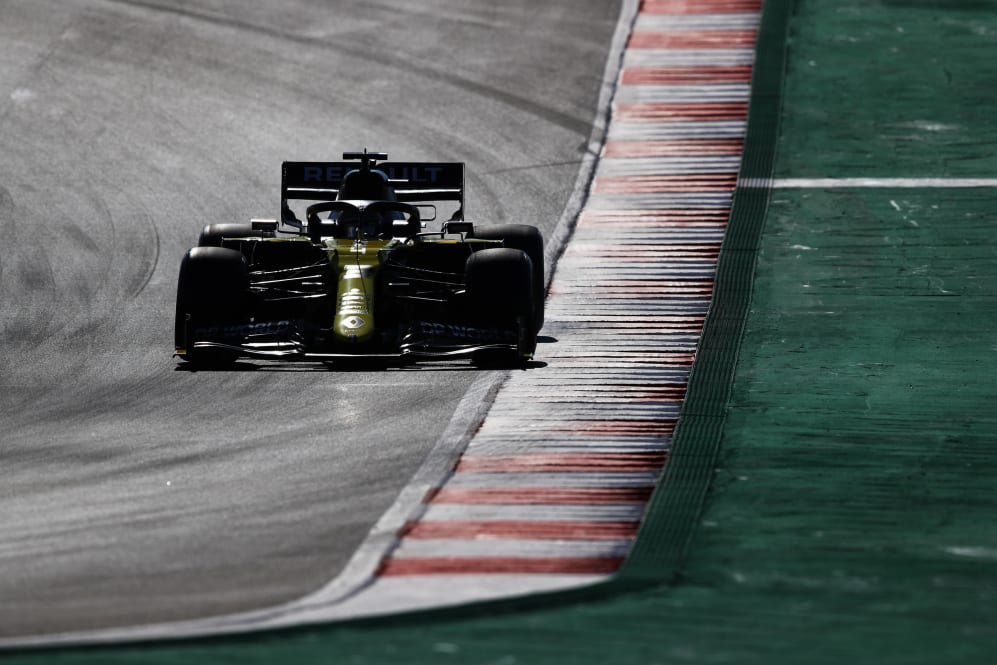
Ocon’s FP1 came to a smoky end as he pitted with an apparent issue which the team soon resolved, meaning the Frenchman could take part fully in FP2. He looked quietly competent around Portimao, but his team mate’s form is a slight unknown as Ricciardo suffered traffic on his final flying runs in FP2. The Aussie had to abort after Latifi was released from the pits into his path, before losing time in Leclerc’s dirty air. More to come from him tomorrow.
“Today we were discovering a new track and a new venue, so it was very busy! The track itself is a bit like a rollercoaster, with so many ups and downs and it’s good fun to drive. We did struggle a bit today and I found that straight away there was just no grip, it’s like nothing I’ve driven before. And then we obviously had the tyre test which limited some of our running in the afternoon. The grip is completely different to what we are used to so we’ve got to maximise it the best we can tomorrow.”
Daniel Ricciardo – FP1: 1:20.058, P9; FP2: 1:19.987, P13
“The track is really cool and it’s very up and down with a lot of blind spots. The surface is a little difficult to drive on currently with very low grip as it’s quite new. But it’s obviously the same for everyone. I think overall it was a little frustrating today and we didn’t get a lot of good running done. We’ve got some homework to do tonight that’s for sure, but I think we’ll be okay. I think tomorrow will be luck of the draw when it comes to getting a clean lap and managing the tyres.”
Ciaron Pilbeam, Chief Race Engineer
“It was a more difficult Friday than usual. The track grip was very low in the morning practice session, and the cars were sliding around quite a lot. Grip was still low in the afternoon, and even on the softer tyres the warm-up was slow and our car was not as well-balanced as it has been recently. The tyre testing that all teams took part in at the beginning of Free Practice 2 ran smoothly for us, but the remainder of the session was quite broken up by two red flags, and along with everyone else we missed a lot of our usual running. It wasn’t our best Friday, but we know what we need to focus on to get the most out of the car and the tyres for qualifying tomorrow.”
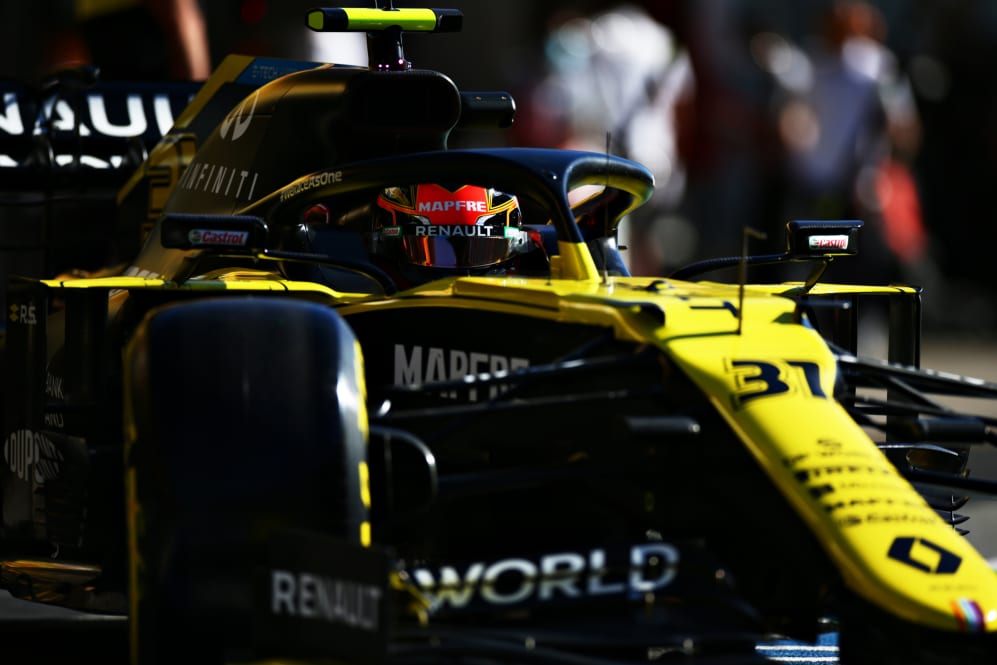
PORTIMAO, PORTUGAL – OCTOBER 23: Esteban Ocon of France driving the (31) Renault Sport Formula One Team RS20 drives in the Pitlane during practice ahead of the F1 Grand Prix of Portugal at Autodromo Internacional do Algarve on October 23, 2020 in Portimao, Portugal. (Photo by Peter Fox/Getty Images)
PORTIMAO, PORTUGAL – OCTOBER 23: Esteban Ocon of France driving the (31) Renault Sport Formula One Team RS20 drives in the Pitlane during practice ahead of the F1 Grand Prix of Portugal at Autodromo Internacional do Algarve on October 23, 2020 in Portimao, Portugal. (Photo by Peter Fox/Getty Images)
Alfa Romeo
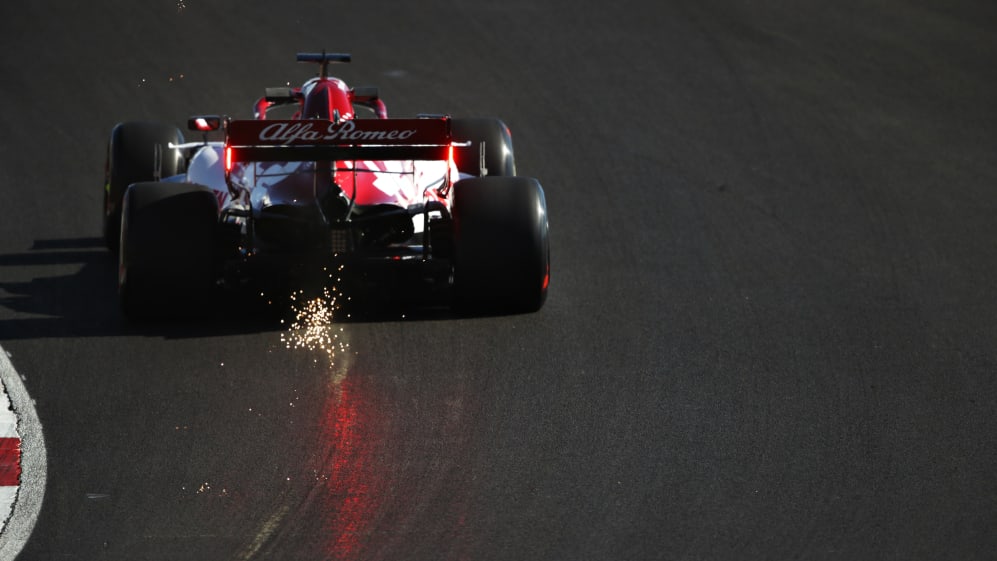
Raikkonen looked handy around this track in FP1, a surprise figure in the top 10 at the flag. Roll on second practice and the Finn fell back, although he at least comfortably had the beating of his team mate. Giovinazzi couldn’t get a clean lap in on the soft compound tyre in FP2 and thus wound up propping up the field.
Kimi Raikkonen – FP1: 1:19.954, P8; FP2: 1:20.490, P15
“It was very slippery out there, but once conditions improve this should be a pretty nice track to drive. It’s a fun layout, although I honestly expected it to be a bit trickier before the weekend. The lack of grip was an issue, but I am sure the others were not that happy either. The track will evolve and we will find something to increase the grip – the conditions were already better in FP2, although we ended up losing a lot of time with the red flags. We’ll see what steps we can take tonight to be in a good shape for tomorrow.”
Antonio Giovinazzi – FP1: 1:21.009, P16; FP2: 1:21.396, P20
“I drove on this track in F3, but to go around here in a Formula 1 car is a completely different experience. It’s a really nice layout, with blind crests and challenging corners – a fun one to drive. The track was very green and the grip levels very low, which made especially the morning session quite difficult. In the afternoon, the red flag disrupted our programme as they stopped our low-fuel runs, so we didn’t really put a time together: we’ll only see tomorrow what our level really is.”
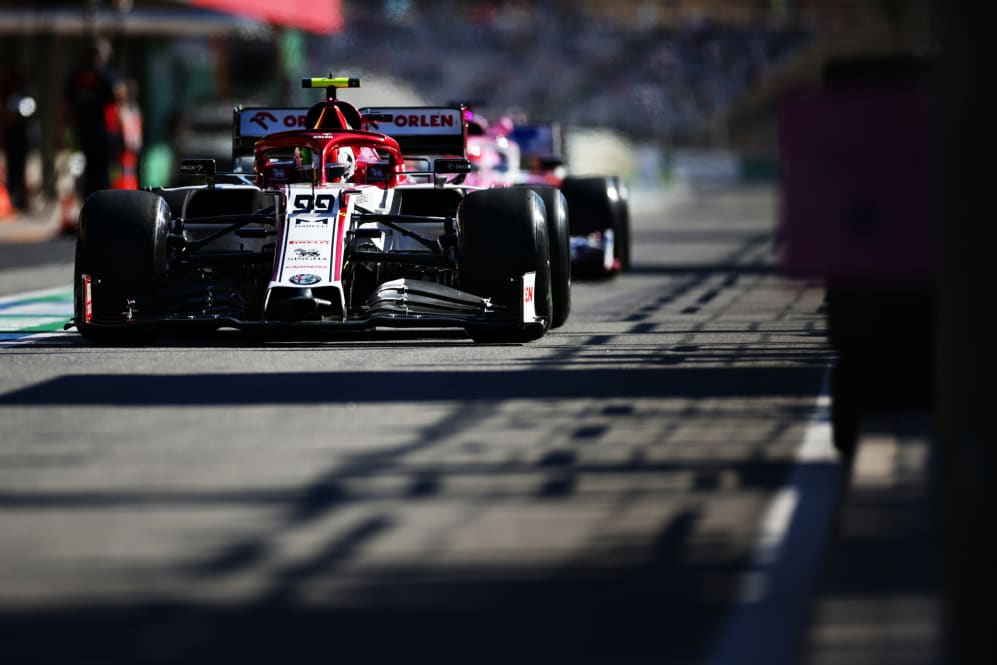
PORTIMAO, PORTUGAL – OCTOBER 23: Antonio Giovinazzi of Italy driving the (99) Alfa Romeo Racing C39 Ferrari drives in the Pitlane during practice ahead of the F1 Grand Prix of Portugal at Autodromo Internacional do Algarve on October 23, 2020 in Portimao, Portugal. (Photo by Peter Fox/Getty Images)
PORTIMAO, PORTUGAL – OCTOBER 23: Antonio Giovinazzi of Italy driving the (99) Alfa Romeo Racing C39 Ferrari drives in the Pitlane during practice ahead of the F1 Grand Prix of Portugal at Autodromo Internacional do Algarve on October 23, 2020 in Portimao, Portugal. (Photo by Peter Fox/Getty Images)
Haas
After grabbing the headlines yesterday, today was all about the on-track action. Grosjean was vociferous about the lack of grip and track limits, but did seem to settle down as the day wore on. With Magnussen likewise managing a good haul of laps, the team have plenty of data to analyse as they seek to avoid a Q1 exit in qualifying tomorrow.
“I think it’s a really cool circuit, there’s a lot of up and downs, a lot of blind corners. It makes it hard to learn, if I’m being a hundred percent honest – I didn’t do any sim work, so my first laps were this morning. Things went ok, but I think the tarmac is quite new which makes it slippery. It’ll get better and better, for sure, especially in the near future – but maybe not for this event. The wind picked up a bit this afternoon. Using the prototype tyres at the beginning of FP2 wasn’t easy. It was good for Pirelli, but not for our run plan. Then we had a lot of red flags cutting our running short. It’s a cool track though and I’m happy we’re here. Portugal’s a great country and I think people are excited we’re here.”
Kevin Magnussen – FP1: 1:20.846, P14; FP2: 1:20.680, P16
“This place is pretty cool, in a way, but then today there was very low grip – which is kind of a shame, as you go slow. You’re running around and the car doesn’t feel very good. If it was high grip, this track would be really cool. Anyway, it’s been a normal kind of day for us. I struggled a little bit more on race pace, I need to see what’s going on there. It went reasonably well on low-fuel, but it’s on the high-fuel we need to find the problem. I don’t think we have issues that others don’t have, everybody’s struggled with grip, I think we just have it a little worse. That’s what we’ll try and work on tonight and see if we can find out why that is.”
Guenther Steiner, Team Principal
“It’s not been an easy day for us, we don’t really know where we’re at. We obviously had to test the prototype tyres from Pirelli in FP2, that also added to the unknowns from the day. The rest of the afternoon session was just interruption after interruption. It’s not been a very conclusive day. We’re for sure not where we wanted to be, but at least we’ve got some laps in. Now we need to look to figure out why we weren’t more competitive.”
PORTIMAO, PORTUGAL – OCTOBER 23: Romain Grosjean of France driving the (8) Haas F1 Team VF-20 Ferrari drives in the Pitlane during practice ahead of the F1 Grand Prix of Portugal at Autodromo Internacional do Algarve on October 23, 2020 in Portimao, Portugal. (Photo by Peter Fox/Getty Images)
PORTIMAO, PORTUGAL – OCTOBER 23: Romain Grosjean of France driving the (8) Haas F1 Team VF-20 Ferrari drives in the Pitlane during practice ahead of the F1 Grand Prix of Portugal at Autodromo Internacional do Algarve on October 23, 2020 in Portimao, Portugal. (Photo by Peter Fox/Getty Images)
Williams
Russell made very good use of the soft compound tyre in FP2 to catapult himself up to P11. There might be some drivers out of position but the youngster still made the best of the circumstances and nailed his lap when it mattered. He’ll hope for more of the same tomorrow. As for Latifi, the Canadian was in the wrong place at the wrong time more than once as he spent much of the day battling traffic, but still wound up a credible P14 in second practice.
George Russell – FP1: 1:21.374, P18; FP2: 1:19.821, P11
“It was a relatively productive day considering how many red flags there were. The track rubbered in incredibly quickly, those opening 20 minutes were really tricky, but then the grip levels felt really strong towards the end. I was really happy with my lap on the medium tyre which we ended P11. All in all, not a bad day.
“Looking further into the weekend I think we are going to be fighting with Haas and the Alfas again. As FP2 was thrown out of the window due to the red flags there are still a lot of unknows as none of us got any high fuel, long running.”
Nicholas Latifi – FP1: 1:22.054, P20; FP2: 1:20.465, P14
“It was a really fun track to drive, it is always nice to come to circuits that you don’t have much experience on and discover them. FP1 was tricky, there was very poor grip out there which I am sure was the same for everyone. I really struggled to get a good consistent feel for the balance of the car. It was probably one of the most difficult sessions I have driven in all year. FP2 was very busy with everyone doing the Pirelli tyre testing in the opening laps and the second half was quite disrupted with red flags. We definitely have some work to do tonight, and a lot of data to go through and analyse.”
Dave Robson, Head of Vehicle Performance
“We’ve had a good day and although the sessions were a little interrupted, we got through much of our plans and have collected a lot of data. The tyre tests that we did for Pirelli meant that a lot of laps were completed early in FP2, and hopefully this will have helped rubber-in the track.
“The circuit has not disappointed and is proving to be an exciting and tricky race venue. We can still expect to see a lot of changes over the next couple of days as the track surface evolves and the teams and drivers understand the compromises that need to be made in order to be quick in Portimão.
“With many of the runs compromised today, there will probably be a lot of running in FP3 as everyone finalises their set-up for qualifying and the race. We still have a lot of work to do, but we have made a good start and have a good baseline to build on.”
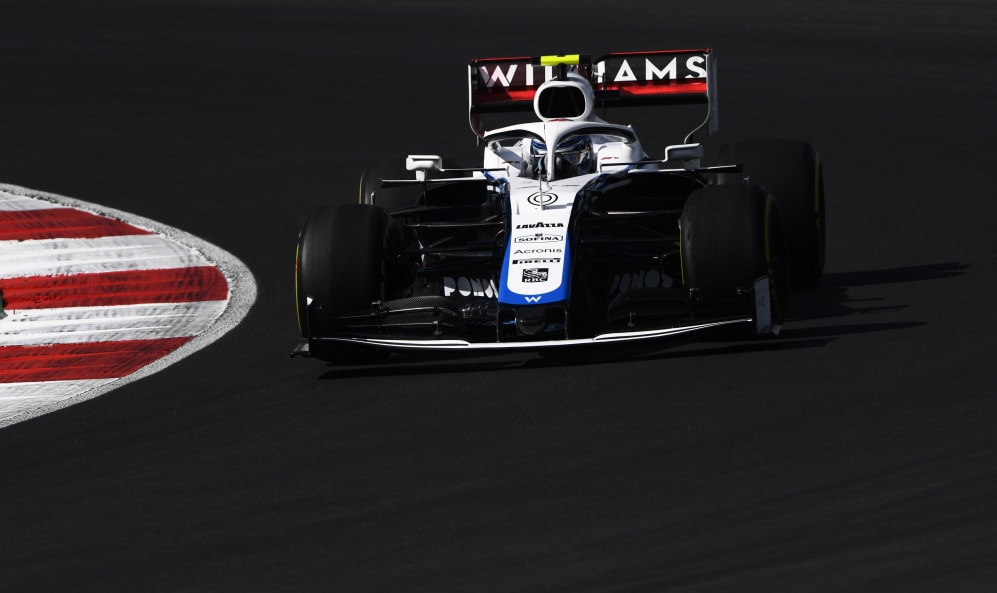
PORTIMAO, PORTUGAL – OCTOBER 23: Nicholas Latifi of Canada driving the (6) Williams Racing FW43 Mercedes on track during practice ahead of the F1 Grand Prix of Portugal at Autodromo Internacional do Algarve on October 23, 2020 in Portimao, Portugal. (Photo by Rudy Carezzevoli/Getty Images)
PORTIMAO, PORTUGAL – OCTOBER 23: Nicholas Latifi of Canada driving the (6) Williams Racing FW43 Mercedes on track during practice ahead of the F1 Grand Prix of Portugal at Autodromo Internacional do Algarve on October 23, 2020 in Portimao, Portugal. (Photo by Rudy Carezzevoli/Getty Images)
Pirelli
Mario Isola, Head of F1 and Car Racing
“It was very useful for us to run the 2021 unmarked prototype tyres during the first 30 minutes of FP2 today, as we gathered plenty of data that will be relevant as we validate the tyre specification for next year. A big thank you to all the teams and drivers for undertaking this important test. As a result of doing the test, as well as the long interruptions to FP2 this afternoon, the teams completed less running than usual, and so there is a lack of data on long runs with the nominated race tyres. This will definitely be a challenge for the rest of the weekend as Portimao is a brand new track to the calendar that nobody is very familiar with. In the morning, due to the ‘green’ track, we experienced some graining – which was no big surprise under the circumstances. As expected, the situation improved over the rest of the day, with a lot of track evolution undoubtedly still to come as more rubber is laid down.”
Reposted from https://www.formula1.com/ 23 – 25 October by staff writer.
Twenty-two EU member states participate in the Schengen Area and 26 European countries have abolished passport and border control.
Where Did it all Begin?
In 1985 Schengen Agreement was signed in Luxembourg near the point where the borders of Germany, France, and Luxembourg meet. The signing in this small wine-making village and commune took place at Schengen Castle. The original building dates back to 1390, but it was virtually rebuilt in the 19th century and now operates as an hotel and conference venue. When consensus could not be reached among all member states on the abolition of border controls, the Schengen Area was established separately by five of the then ten European Community members. In 2006, the village itself was renamed Shengen in recognition of the agreement.
Schengen Member States
Twenty-two of the twenty-seven EU member states now participate in the Schengen Area and twenty-six European countries have officially abolished all passport and all other types of border control on mutual borders. They now function under a single jurisdiction for the purpose of international travel and have a common visa policy.
It is estimated that before the Coronavirus crisis about 3.5 million people commuted to work across internal European borders each day – in some regions constituting up to a third of the workforce.
Consensus was reached on absorption into EU procedures as more EU member states signed the Schengen Agreement. The outer borders of the Schengen Zone are around 50,000 km long, of which eighty percent is water and twenty percent land. Within the Schengen Zone are hundreds of airports and maritime ports.
What is a Schengen Visa?
A Schengen visa allows a short stay for tourism or business purposes of up to 90 days in total within any members of the Schengen Area. The Schengen region is the EU passport-free zone that covers most of the countries in Europe constituting the largest free-travel area in the world.
As there are no border controls within the Schengen Zone, the Schengen visa holder is given the freedom to enter, travel between borders within, and exit the zone from any of the Schengen member countries.
However, if you plan to work, study, or live in any of the Schengen countries for more than 90 days, then you have to apply for a national visa of that European country. In 2019, before the coronavirus outbreak, over15 million people used their Schengen visato travel around Europe.
Portuguese Golden Visa
One of the real perks for foreign nationals who choose to invest in real estate in Portugal is the ability to apply for permanent residency and citizenship after 5 years without the need to reside in Portugal permanently. The applicant is only obliged to visit the country for two weeks every two years in order to renew the Portuguese Golden Visa. Having acquired residency through the Golden Visa program however, the applicant will need to demonstrate ties to the country and pass a basic language test.
Citizenship of Portugal and a Shengen passport carries with it the right to live, work and study anywhere in the European Union for the investor, his spouse, and his dependents. Portuguese residency through the Golden Visa program allows the holder to travel throughout the EU Schengen zone.
Real Estate Investment in Portugal a Global Citizenship Opportunity
MYGRATE INVESTMENTS
Portugal’s beauty and sense of history, its traditions and lifestyle make it an obvious choice for an amazing and truly memorable holiday destination. But have you, as a South African, ever considered the advantage Portugal offers as an investment prospect? The Golden Visa programme opens up a panorama of exciting opportunities to those who have a thirst for a total change of lifestyle.
Lifestyle Choices
Portugal offers, with investment in real estate, the prospect of a complete change of lifestyle in a country that is fascinating, steeped in history, stylish, incredibly scenic, and welcoming. Property has always been a safe long-term asset but property investment in Portugal may be the most valuable investment choice you will ever make.
Residency in Portugal
European residency through the Golden Visa Permit is a safeguard against future instability, ensuring access to education, travel, quality healthcare, and tax freedom.
Global Citizenship
As citizenship through investment, the Golden Visa provides open access to nine countries across Europe and the Caribbean. This Global Citizenship program is a massive asset to any international investor, offering freedom of movement and tax advantages.
Mygrate’s team will guide you through the process according to your situation and lifestyle choice, ensuring you and your family have all the information needed. We will assist you in the purchase of property and ensure that you avoid the pitfalls. We are also here to offer peronalised investment advice, aid with tax-planning, to offer statistical data on property transactions, and provide you with every opportunity to make well-informed investment decisions.
Portugal offers a host of benefits under the Golden Visa regime, not least EU citizenship, which opens up a vast number of opportunities for study and travel, both for you and your family.
As a retirement option, Portugal offers a welcoming atmosphere to ex-pats, excellent tax benefits, prime health-care, and opportunities for travel. The Golden Visa is also an uncomplicated, flexible and speedy way of gaining Portuguese citizenship and a stepping stone into other Schengen countries. It is hands-down the best option for Golden Visa investment.
Invest a minimum of EUR 350,000 in a Portuguese Investment fund
over a period of 5 years.
Advantages
Member of the Schengen Area and the EU
Right to live, work and study in Portugal
Pathways to obtaining Permanent Residency and Citizenship in Portugal after 6 years
And Other Benefits
High standard of education and healthcare
Visa-free travel within the Schengen Countries
Short physical residency requirement
No language, education or management requirements
Dependents
Spouse
Dependent children under 26 as long as they are single and enrolled as full-time students.
Parentsof either spouse if over 66 years old—or 55 and dependent.
Portugal’s Golden Visa scheme is a five-year residency-by-investment program designed for non-EU nationals. If the investment is held for at least five years, permanent residency or citizenship is possible. The Golden Visa opens a number of doors to qualifying investors and their family members giving them the right to live, work and study in Portugal while also permitting free movement in Europe’s Schengen area.
Golden Visa requirements for Portugal
In order to qualify for the program, you need to meet the following requirements:
Be either non-EU, non-Swiss, or non-EEA.
Make a minimum investment of €350,000.
Have a clean criminal record.
Spend a minimum of seven days in Portugal for the first year, then no less than 14 days each subsequent two-year period.
Golden Visa Opportunities and Benefits
Portugal has become especially desirable to foreign investors as a European Union country offering a great number of opportunities and benefits under the Golden Visa program.
5 years until you qualify for a European passport providing access to 26 nations in the EU and visa-free travel to 183 nations
Affordable investment options in real estate starting from €280,000
Every applicant and their dependents have a right to study under the Golden Visa Program at the same cost as permanent residents or citizens.
Public schools, with tuition in Portuguese, are free to those between the ages of 5 – 18 years. Private schools pay in accordance with the academic structure under which they study, whether UK, US, or France.
Under the international Student Statute, Golden Visa dependents can also study in a Portuguese university. The Student Statute, under Portuguese law, allows for non-European citizens to apply through a special enrolment application if certain requirements are met—such as a full, secondary education or a recognised equivalent.
Some Portuguese universities have established ties with other institutions in various parts of the globe to facilitate transfers to an equivalent degree, allowing for credits on subjects taken.
Guiding you through Portugal’s Non Habitual Residence Tax (NHR)
MYGRATE INVESTMENTS
In order to boost Portugal’s competitiveness internationally, the non-habitual tax regime was implemented in 2009 to attract up-and-coming investors and professionals into the country. The NHR offers substantial tax savings for those who qualify.
The advantages of non-habitual tax residency in Portugal
Special personal income tax benefits over a 10-year period
Possible to enjoy tax exemptions on almost all foreign source income
A flat rate 20% for certain source incomes within Portugal – including specific professions as well as from self-employment. (Normal income tax rates peak at 48%)
Become part of a white-listed tax environment within the EU
No minimum stay requirement
Benefit from tax exemption on gifts or inheritance to direct family members
No wealth tax
Free remittance of funds to Portugal
Application for the non-habitual resident tax regime in Portugal
Requirements:
The applicant should have the right to reside in Portugal either through being an EU/EEA/Swiss citizen, or through schemes such as the Golden Visa program.
The applicant must not have been a Portuguese tax resident in the five years prior to applying for NHR residency in Portugal.
The individual must have a place of abode in Portugal on the 31st of December of the year of application. This place of residence must be seen as an intention to maintain and occupy it as a home.
Do I have to buy or can I rent property as poof of residency in Portugal?
You are not required to purchase property in Portugal under the NHR regime but applicants must have a domicile in Portugal that demonstrates the intention to hold and occupy a place of residence. Therefore, although it is beneficial for NHR tax residents to buy property in Portugal, a rental contract for 12 months also sufficiently qualifies you as proof of residence.
What documentation is required to prove residency?
You will need to provide proof of a lease or loan agreement if you decide to rent a property. If you have bought a property, a deed of purchase will be required.
Portugal’s non-habitual tax resident and double taxation agreements
Double-Taxation Agreements (DTAs) generally allow for most categories of income to be taxed in the country of source but, in order to be recognised as jurisdictions open for foreign investment, choose not to tax the income earned by non-residents.
Under the NHR tax regime, Portugal does not tax most foreign source income on money that may be taxed abroad, thus allowing for NHR residents to receive foreign income completely free of tax.
Portugal has signed Double-Taxation Agreements with 79 countries using the OECD model tax convention in the absence of a DTA.
See below for the list of countries that have established Double-Taxation Agreements with Portugal.
Countries that have double taxation treaties with Portugal
Algeria, Austria, Andorra, Bahrain, Barbados, Belgium, Brazil, Bulgaria, Canada, Cape Verde, Chile, China, Colombia, Croatia, Cuba, Cyprus, Czech Republic, Denmark, East-Timor, Estonia, Ethiopia, Finland, France, Germany, Georgia, Greece, Guinea-Bissau, Hong Kong, Hungary, Iceland, India, Indonesia, Ireland, Israel, Italy, Ivory Coast, Japan, Kuwait, Latvia, Lithuania, Luxembourg, Macau, Malta, Mexico, Moldova, Montenegro, Morocco, Mozambique, Netherlands, Norway, Oman, Pakistan, Panama, Peru, Poland, Romania, Russia, Qatar, San Marino, São Tomé and Principe, Saudi Arabia, Senegal, Singapore, Slovakia, Slovenia, South Africa, South Korea, Spain, Sweden, Switzerland, Tunisia, Turkey, United Arab Emirates, United States of America, United Kingdom, Ukraine, Uruguay, Venezuela, Vietnam
Taxes on foreign source income under the NHR regime
Employment income
Foreign source income is tax-exempt under the NHR regime or taxed at a flat rate of 20% if it falls under the list of eligible professions.
Self-employment income
Is taxed at normal progressive rates unless it falls under the eligible profession categorization.
Unless the individual in question already pays into another social security system, self-employment income will be subject to social security contributions.
Is generally taxed at a flat rate of 20%, although the taxpayer can choose to pay usual progressive rates if they are less.
Tax-exempt if the individual is from an eligible profession provided he is from a country with a DTA , or in the absence of which, under the OECD model tax convention and is not a tax haven,
Real estate income and capital gains
Tax-exempt if from a country with a Double Tax Agreement.
Tax-exempt if from a country without a DTA but which is not a blacklisted tax haven.
Capital gains from the disposal of securities – shares, bonds, etc. are subject to an optional rate of 28%, 35% if from a blacklisted tax haven.
Royalties and income from financial assets
Are tax-exempt if the income comes from a country with a DTA.
Tax-exempt if the income arises from a country without a DTA provided it is not a blacklisted tax haven.
Taxed at 28% or 35% if the country is a blacklisted tax haven.
Pension income
Tax-exempt if from a country with a DTA
Tax treatment of Portuguese source income under the NHR regime
Employment income
If employment does not fall under the list of eligible professions the usual progressive tax rates apply.If employment falls under eligible NHR professions, a tax rate of 20% applies, but progressive tax rates are an option if this amounts to less.
Self-employment income
The usual progressive tax rates apply if employment does not fall under the list of eligible professions.
If employment does not fall under the list of eligible professions the usual progressive tax rates apply.
If employment falls under eligible NHR professions, an optional tax rate of 20% is applicable, but usual progressive tax rates can also be applied if this amounts to less.
Real estate income and capital gain
Rental income is taxed at an optional rate of 28% or at the at normal progressive rates.Net capital gains are taxed at 50%, at the normal progressive rates.
Pension income
Is taxed at usual rates.
Professions Considered to be High Value Under the NHR
Certain professions of cultural and economic value to Portugal are granted generous tax exemptions under the NHR regime .The following professions are considered of high added value:
Architects, Engineers, Geologists, Theater, Ballet, Cinema, Radio, Television artists, Singers, Sculptors, Musicians, Painters, Auditors, Tax consultants, Dentists, Medical Analysts, Clinical surgeons, Ship’s doctors, General Practitioners, Medical physiatrists, Doctors, University lecturers, Psychologists, Archaeologists, Biologists and life science experts, Computer programmers, Software consultants, Computer consultants and related services, News agencies, Other information and service activities. Scientific research and development, Research and experimental development on natural sciences and engineering, Research and development in biotechnology, Designers, Investors, Managers, Directors, Higher management.
NHR in Conjunction with the Golden Visa
Citizens of countries outside of the EU/EEA/Swiss nations wishing to apply for the NHR regime in Portugal may want to take advantage of the Golden Visa program. Those investors who first acquired residency through the Golden Visa program in Portugal will then become eligible for the NHR regime. Mygrate can provide you, as the investor, with personalised advice to enable you make the best possible investment decision.
Frequently asked questions regarding the non-habitual resident tax regime
Is it possible to track applicationsfor non-habitual residency in Portugal?
You can track the progress of your application if you registered online at the Portal das Finanças.
How do you know if your NHR registration has been accepted?
You can check the status of your application through the Portal das Finanças, under Aceda aos Serviços Tributários, clicking on Consultar Pedido and then Inscrição Residente Não Habitual.
Does it take long to apply for the NHR tax regime in Portugal?
Generally it only takes a couple of weeks before you hear whether your application has been accepted or declined.
Is it necessary to make a statement of assets when applying for the NHR regime?
No, you will just need to state your income on your tax returns.
Is the NHR regime in Portugal likely to change in the foreseeable future?
The regime has been in place since 2009 and has proved very popular – it is unlikely to change in the near future.
Is it possible to backdate my registration as a non-habitual tax resident?
Once your application is confirmed, your NHR status will automatically be backdated to when you first registered as a tax resident in Portugal.
When is the best time to apply for the Portuguese NHR tax regime?
You must apply for NHR before March 31 of the tax year during which you became a tax resident in Portugal.
Does Portugal have a wealth tax?
While there is no wealth tax in Portugal, an extension of the existing property tax, the Imposto Municipal Sobre Imóveis (IMI), was introduced in 2017 . This is an annual tax paid only on Portuguese properties, regardless of the country of residence of the owner. It is calculated by property value, on properties in excess of €600,000. Married couples and civil partners have a combined allowance of €1,200,000. The tax rate varies between 0.4%, 0.7% and 1.0%.
What is the Portuguese law in regard to civil partnerships?
Civil partnerships and marriage are treated with equally. Under Portuguese law, a couple in a civil partnership receive the same treatment as married partners for tax purposes.
What taxes are paid when buying property in Portugal?
Taxes on property vary according to the purchase. There are three main taxes on property:
Municipal property tax (IMI)
Real estate transfer tax (IMT)
Stamp duty (IS)
Does Portugal have an inheritance tax?
Spouses, direct descendants and ascendants are exempt. For anyone else, there is a 10% stamp duty on Portuguese assets.
Is there a gift tax in Portugal?
Spouses, direct descendants and ascendants are exempt from both inheritance and gift taxes in Portugal. A 10% stamp duty applies on Portuguese assets to all others, with an additional rate of 0.8% on real estate.
Are foreign source rental incomes, investment incomes, and capital gains taxed in Portugal?
They are not taxed in Portugal if they come from a foreign source.
Would the renegotiation of double tax treaties between my country of residence and my country of income affect the NHR regime in Portugal?
It is not likely that any existing double tax treaties between Portugal and other countries will be terminated. No other countries have signaled intentions to change these treaties with Portugal, and it is unlikely that amendments would substantially affect the NHR regime. However, there have been cases, as with Finland and Sweden, in which agreements have been amended.
Are there any other tax considerations that I may have overlooked?
Taxation laws are complex with regard to interactions between Portuguese and home tax law and solutions can vary from one case to another. Although we take care to ensure that all our information is correct and up-to-date, this outline must be considered a guide; there is ultimately no substitute for advice tailored to your specific circumstances.
Mygrate’s team will guide you through the process according to your situation and lifestyle choice, ensuring you and your family have all the information needed. We will assist you in the purchase of property and ensure that you avoid the pitfalls. We are also here to offer peronalised investment advice, aid with tax-planning, to offer statistical data on property transactions, and provide you with every opportunity to make well-informed investment decisions.
For the tourist who loves the vibrant nightlife buzz, Algarve can cater to your desire for fun. Three coastal towns in the Algarve, Albufeira, Pria da Rocha, and Lagos are known for their swing!
Albufeira
Albufeira’s amazing, pristine beach that stretches almost the full length of the town-centre is the major focus during the day. Stretched out on the sand or shaded by beach umbrellas, bathers while-away the lazy daytime hours, often returning to their hotels only for a sumptuous midday meal and a siesta. The beach is flanked on the one side
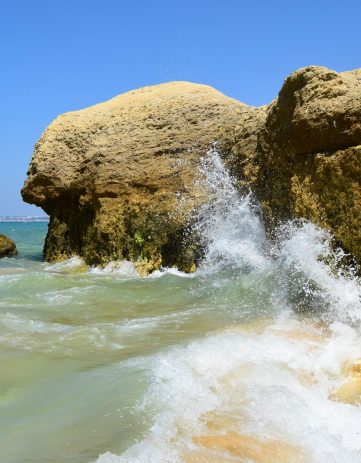
by sandstone cliffs that project a protective armout into the sea. Above them, the town appears at first glance to be a jumble of stark white buildings clinging tenaciously to the hillside like coral.
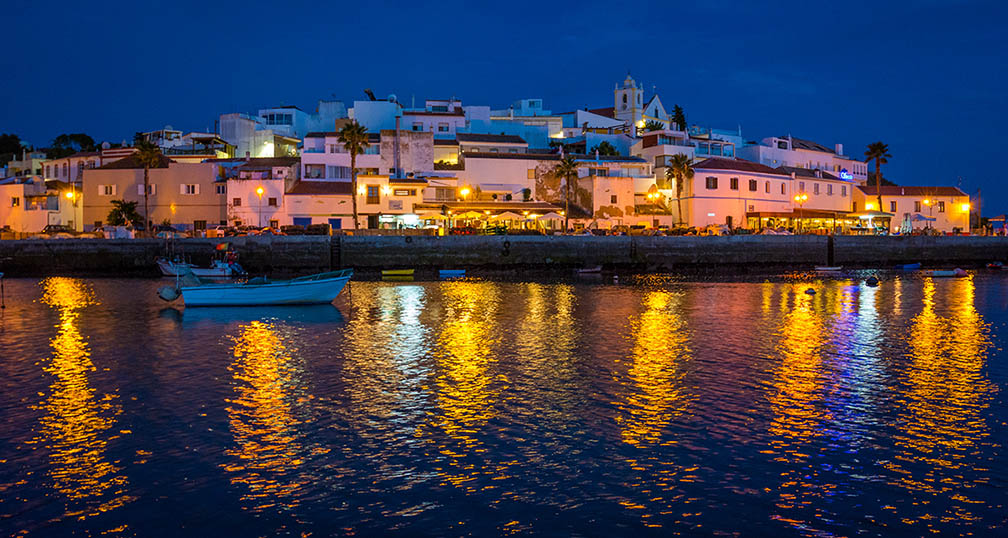
In the casual atmosphere of Albufeira’s narrow streets, the white jumble resolves itself into individual buildings neatly painted in shades of white, grey, and terracotta. Boutiques and blue-and-white canopied shop-fronts invite shoppers to explore each wonderfully and individually paved street.
For other pleasure-seekers sightseeing, or a day-trip along the coast to one of the many little towns in the vicinity is an excellent option, or perhaps a hike and the discovery of a secluded cove. But once the sun sets on the Algarve, the real entertainment begins in Albufeira…
This is the Algarve’s major tourist centre where not much Portuguese is spoken locally,
but top-class hotels, restaurants, bars and sports bars abound. Music rings out across
the night from a host of different sources, calling revelers to new discoveries. The Strip,
a 2 km avenue of clubs and bars is situated in the Montechoro area, about 3 km from
the centre of town. The bright neon lights draw the mostly youthful crowd like moths to
the abundant drinking spots and eateries on the Avenida Sá Carneiro. From there, the
partying and dancing continues into the early hours. From the rowdy and boisterous to
the mellow and romantic, there is something for everyone in Albufeira!
Pria da Rocha
The mild weather in the Algarve makes it a particularly good holiday destination for a large portion of the year. May to October are likely to be the best months for a visit. July and August are generally the hottest with temperatures of around 30 -35 degrees C January is cold and wet so not the best time of year for the holiday-maker.
Praia da Rocha is in competition with Albufeira with those almost endless beaches of sun-bleached sand nearly as broad as it is wide. Then there are sparkling sands and aquamarine coves such as Ponta da Piedade where the ocean eddies and flows around fascinating rock formations. Take a boat cruise to the Benagil sea caves, or a sailing cruise along the stunning coastline.
If it’s nightlife you’re seeking though, Pria da Rocha boasts a wealth of restaurants catering to every taste. There are also world-class hotels,
swinging bars and clubs, and the Algarve Casino Hotel situated in the heart of the town.
Pria da Rocha
While Lagos has not succumbed to a massive influx of tourism, it is still a popular destination for those who enjoy a vibrant nightlife. The city is set like a jewel in the scenic beauty of the Western Algarve. On the east side of Lagos is the Meia Praia Beach, the largest sandy beach of the western Algarve, a four kilometer stretch of pristine sand.
But your holiday would simply not be complete
without a coastal boat trip. The weathered cliffs of the Ponta da Piedade headland are the most spectacular natural feature of the Algarve. The constant wash of the sea has sculpted arches, caves, and hidden grottos, from the rock, and the surroundings cry out to be explored.
The pristine marina complex in Lagos has been designed to complement the local architecture while retaining a distinctly contemporary feel.You may not have a yacht anchored in the yacht basin, but you could have a meal in one of the marina’s many restaurants and luxuriate in the view.
Lagos retains its Portuguese character and a rich sense of its seafaring past. At the estuary, not far from the marina complex, lies the old fishing harbour with colourful fishing boats constantly pursued by a host of hopeful gulls.
Many of Lagos’ hotels and restaurants welcome families. There are sheltered beaches supervised by lifeguards, theme parks, water parks, a local zoo, and boat trips from the harbour to watch the dolphins at play.
Lagos is far less frenetic at night than Albufeira or Praia da Rocha and, as such, more suited to a family holiday. Take a week in Lagos to explore the city and visit some of the surrounding areas such as the towns of Portimão, Sagres, Silves, and Praia da Luz.
There is a charm to the city – a delicious sense of the traditional; cobbled streets, genuine Portuguese restaurants all set against the welcoming pleasure of the modern hotels and tourist attractions.
Porto is a vibrant city, rich in history, boasting a wealth of tourist attractions, and a scintillating nightlife. It is rapidly becoming one of Western Europe’s most visited tourist destinations. Porto is the second-largest Portuguese city and a prime infrastructural hub, easily reached by different means of transport from the rest of the nation as well as from Europe. However, despite remaining relevant to today’s world, Porto retains an integral link with its ancient past.
The Ribeira
Photographer – Michael Baccin
With its narrow cobbled streets and fascinating buildings, da Ribeira was not declared a World Heritage Site without good reason. It is the oldest district of the city, drawing the visitor into an era long past. Clusters of colourful buildings line the Duoro River and the Ribeira square draws locals and tourists alike to its cafes and restaurants on the quayside. Built on the river mouth and with the salty smell of the sea in the air, the Ribeira is also a busy commercial area where fishmongers, grocers, bakeries and butcheries are interspersed with cobblers, bookshops and art studios.
Douro River
A boat tour is the best way to explore the scenic Douro River and there is a radically different way of viewing one of the river’s magnificent bridges – a real break-away from traditional sightseeing. Porto allows you the opportunity to climb the arches of the Arrábida Bridge. Participants are fitted with a harness and secure lifeline and attached by cable to the handrail. A guide leads you, via a narrow pedestrian stairway, up the ascent of the graceful arch of the bridge. At the peak, sixty-five meters above the Douro River you will be rewarded by panoramic views of the city and the river mouth.
Wine Tours and Wine Tasting
Photographer Nacho Dominguez
Further inland, the banks are lined with the cellars that produce and store Porto’s famous port wine. Wine tasting tours are immensely popular and a great draw to the tourist industry. Take a boat cruise up the Douro River where you will be offered wine-tasting opportunities and a typical Portuguese lunch. There are also half-day or full-day, scenic Douro Valley tours through the vineyards where you can visit the farms and cellars of the region. A visit to a traditional wine cellar will tell you more about the history, the harvesting and production of local wines and, no less important, you will discover how to identify the difference between Port families and learn to taste them like a professional!
Climate
Northern Portugal tends to be cooler and wetter than the southern region but Porto’s tourist season begins in May and continues until the end of October. To enjoy Porto’s unspoilt beaches, the peak season from June to the end of August, is generally hot and dry and most suitable for spending time on the beaches.
Porto for a Visit
You need at least a week to take in all the sites, smells, and sounds of this amazing city. On offer for the holiday-maker is a cross section of places to visit ranging from the colourful and the quaint, to the gold-plated splendour of the BaroqueChurch of São Francisco and the splendid pre-Romanesque Porto Cathedral. There are food and wine experiences to be had, great beaches and even a number of surfing spots. All in all, Porto is a city that may hook you in for a longer stay.
Real Estate Investment in Portugal
In 2012, Portugal streamlined the Non-Habitual Resident (NHR) Tax Regime with the intent of attracting non-resident citizens. To anyone wishing to set up residence in Portugal, this offers significant tax benefits. All that is required to apply for the Non-Habitual Residence Tax Regime is that the applicant file a request stating that he or she had not resided in Portugal during the past 5 years. During the related year they must remain in Portugal for more than 183 consecutive or interpolated days or have housing that they intend to use as their habitual residence by December 31st of that year.
To Quote:
Exemption from taxation in Portugal, of foreign income, originated from dependent labour or pension income;
Taxation at 20% flat rate of proceeds from Portuguese origin, that result from added value activities.
Benefits under the Non-Habitual Tax Resident Regime are granted for a period of 10 years.
Portugal is sticking with its golden visa program even though locals are being squeezed.
Ana Guerreiro points across the street at a handful of housing projects in Lisbon’s up-and-coming riverside neighborhood of Marvila. It’s where she moved in with her mother last year after soaring rents meant she could no longer afford to live alone.
“Prices have gone through the roof here,” said Guerreiro, 33, stepping outside the cafe where she waitresses for a break.
Portugal is western Europe’s most dynamic property market thanks to tax incentives for foreign buyers and a so-called golden visa program, which offers residence permits in return for a minimum 500,000-euro ($550,000) investment. The flip side for people like Guerreiro is that they have become collateral damage with no prospect of prices cooling any time soon.
Foreign investors have pumped 4.3 billion euros into Portuguese real estate through the residency program since it began in 2012. Prime Minister Antonio Costa, who is widely expected to win a second term in an election next month, has signaled the country needs the incentives to continue to bring in money. Foreign Minister Augusto Santos Silva even called the programs a “sovereign right.”
Lisbon has become a magnet for tourists in Europe as many investors renovate properties and turn them into short-term rentals through sites like Airbnb. The short-term rentals have been blamed for increasing prices because they target visitors who can afford to pay more than locals.
Hot Market
According to the latest figures, Portuguese property prices increased 9.2% in the first quarter of the year, the biggest gain in the euro region and the steepest rise in the European Union after Hungary and the Czech Republic, according to data compiled by Eurostat.
“They just can’t afford to say no,” said Tiago Caiado Guerreiro, a lawyer in Lisbon who specializes in tax legislation. “These incentives have turned cities like Lisbon into a magnet for foreign investors who helped put the city on the map as a top tourist destination.”
Not long ago, as Europe recovered from the global financial crisis, Portugal lagged behind its neighbors in attracting investment — and it showed. Buildings in historic Lisbon were crumbling, their tile work and masonry faded and cracked.
All that began to change after the government scrapped rent controls in 2012 and introduced the golden visa and tax breaks to attract wealthy foreign residents and property investors. At the time, about 12,000 buildings were in poor condition or in ruins, about 20% of the total, according to city council estimates.
Now, Lisbon’s cobblestone streets and hilltop palaces are being restored, and hundreds of buildings converted into new hotels, short-term rental apartments and luxury retail stores. Investment in real estate and the tourism industry has broken records, boosting the Portuguese economy, which expanded for a fifth consecutive year in 2018.
Attracting Attention: Portugal is still a leading destination for Citizenship by Investment
“Lisbon has never been better in terms of the restoration of its buildings,” said Francisco Bethencourt, a history professor at King’s College in London. “The number of decrepit buildings has been reduced and some of the misery that existed in some neighborhoods is no longer visible. However, this change has had huge social costs as locals with fewer financial resources are being pushed to the periphery.”
Ana Pinto, the president of the Association of Residents of the County of Marvila, can see some benefits of more money coming into her town, which now draws comparisons to hipster havens in New York’s Brooklyn.
But she complains that some of the more than 600 members of her association are moving elsewhere after home prices rose 88% in the first quarter from a year earlier, according to Portugal’s National Statistics Institute in Lisbon.
“Real estate prices have simply become unbearable for us,” said Pinto. “What can we do?”
Canada ended an immigrant investor plan in 2014 after concluding that it provided “limited economic benefit.” Compared with other economic immigrants, investors paid less tax, were less likely to stay in Canada, and often lacked the skills, including proficiency in English or French, to integrate, the government found. The federal program was admitting roughly 2,000 investors a year when it ended.
“What the investor program became was a kind of de facto retirement program,” said Dan Hiebert, an expert on international migration at the University of British Columbia in Vancouver. “Instead of propelling the investment side of the Canadian economy, it propelled the consumption side of the Canadian economy,” including home purchases, expensive cars and so on, he said.
In Europe, about 20 countries operate investor residence programs, which allow the holder to travel freely within the continent’s Schengen Area during a limited period of time, according to the European Commission. In January, the commission warned that the programs expose the bloc to money laundering and security risks.
It also can change the way people live in cities.
Last month, an online ad promoting the rental of container homes in Marvila made headlines in the local press, which linked the 600-euro-a-month converted shipping containers to the lack of affordable housing in Lisbon. A few days later, the city council ordered the removal of the containers, daily newspaper Publico reported on its website.
About six miles away, in the town of Amadora, City Council President Carla Tavares said Lisbon’s real estate boom has helped turn a suburb that was once seen as a hot spot for crime into a vibrant hub for foreign residents and companies like Siemens AG. Real estate prices in Amadora increased 23% in the first quarter from the same period a year earlier.
“It’s very positive to see so much rehabilitation in the city,” Tavares said in a phone interview on Aug. 14. “We must let the market function.”
—With assistance from Natalie Obiko Pearson and Joao Lima.
There are 5 basic qualifications for applying for a Portuguese Golden Visa:
First, proof must be provided that investment funds originate from abroad.
You should have no criminal record.
You do not own property frozen with the EU zone.
All application and processing fees must be paid up to date.
Valid Schengen visa essential when entering Portugal for the first time.
Mygrate – simplifying investment
Mygrate’s reason for being is to assist South Africans and people from all nationalities to make investments in the EU with confidence and peace-of-mind. We do the diligence, you reap the benefits. If you’re considering a move, why not set up a Zoom meeting with Joanne to discuss the possibilities further? Citizenship by investment starts at €350,000 for investments in regeneration projects in older districts, and €500,000 for new builds.