Categories
News

Portugal and the Schengen Agreement

Twenty-two EU member states participate in the Schengen Area and 26 European countries have abolished passport and border control.

Where Did it all Begin?

In 1985 Schengen Agreement was signed in Luxembourg near the point where the borders of Germany, France, and Luxembourg meet. The signing in this small wine-making village and commune took place at Schengen Castle. The original building dates back to 1390, but it was virtually rebuilt in the 19th century and now operates as an hotel and conference venue. When consensus could not be reached among all member states on the abolition of border controls, the Schengen Area was established separately by five of the then ten European Community members. In 2006, the village itself was renamed Shengen in recognition of the agreement.

Schengen Member States

Twenty-two of the twenty-seven EU member states now participate in the Schengen Area and twenty-six European countries have officially abolished all passport and all other types of border control on mutual borders.  They now function under a single jurisdiction for the purpose of international travel and have a common visa policy. 

Bulgaria, Croatia, Cyprus, and Romania are legally bound to join the area in the future, while Ireland maintains an opt-out.  The four European Free Trade Association (EFTA) member states – Iceland, Liechtenstein, Norway and Switzerland, which do not have EU membership, have also signed agreements in association with the Schengen Agreement.  And the three European microstates, Monaco, San Marino, and the Vatican City, which are enclaves within an EU member state, are de facto part of the Schengen Area.

It is estimated that before the Coronavirus crisis about 3.5 million people commuted to work across internal European borders each day – in some regions constituting up to a third of the workforce. 

Consensus was reached on absorption into EU procedures as more EU member states signed the Schengen Agreement. The outer borders of the Schengen Zone are around 50,000 km long, of which eighty percent is water and twenty percent land. Within the Schengen Zone are hundreds of airports and maritime ports.

What is a Schengen Visa?

A Schengen visa allows a short stay for tourism or business purposes of up to 90 days in total within any members of the Schengen Area. The Schengen region is the EU passport-free zone that covers most of the countries in Europe constituting the largest free-travel area in the world.

As there are no border controls within the Schengen Zone, the Schengen visa holder is given the freedom to enter, travel between borders within, and exit the zone from any of the Schengen member countries. 

However, if you plan to work, study, or live in any of the Schengen countries for more than 90 days, then you have to apply for a national visa of that European country.  In 2019, before the coronavirus outbreak, over 15 million people used their Schengen visa to travel around Europe.

Portuguese Golden Visa

One of the real perks for foreign nationals who choose to invest in real estate in Portugal is the ability to apply for permanent residency and citizenship after 5 years without the need to reside in Portugal permanently.   The applicant is only obliged to visit the country for two weeks every two years in order to renew the Portuguese Golden Visa.   Having acquired residency through the Golden Visa program however, the applicant will need to demonstrate ties to the country and pass a basic language test.

 Citizenship of Portugal and a Shengen passport carries with it the right to live, work and study anywhere in the European Union for the investor, his spouse, and his dependents. Portuguese residency through the Golden Visa program allows the holder to travel throughout the EU Schengen zone.

Categories
Cascais Portugal

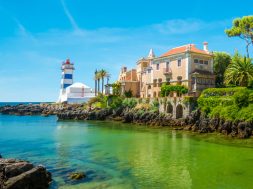
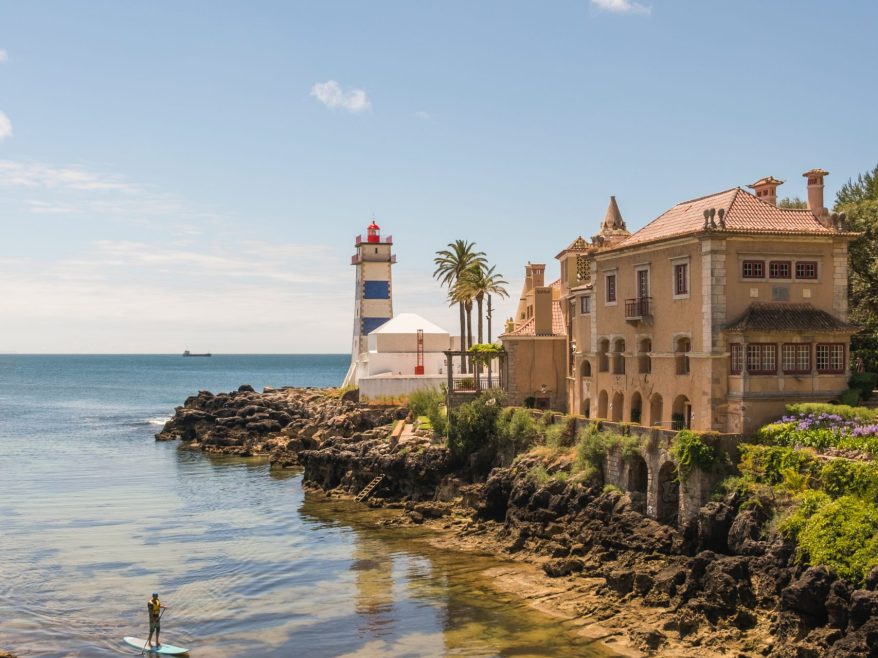
Cascais, Portugal – A Fishing Town, Charming and Traditional

Cascais, Portugal – A Fishing Town Charming and Traditional

Along the northern side of the Tejo Estuary is the Linha de Cascais, an urban railway that takes you from Lisbon to the little fishing town of Cascais. The train departs from the Cais do Sodre train station in Lisbon and ends its short but delightfully scenic journey along the River Tagus, at Cascais station. The quickest and easiest method of travel from Lisbon is by train, particularly as the station in Cascais is located in the centre of town. Travel by car is easy but parking is limited. You also have the option of a somewhat slower bus-ride from Lisbon, but the bus terminal is not as conveniently situated as the station.

A notable landmark in Cascais is the Cidadela, a fortress built in the 15th century to defend the town against Spanish invaders. Four hundred years later, King Louís I of the ruling House of Braganza visited this little fishing retreat, renovated the fortress and took up summer residence there. From then on, Cascais became one of the most sought-after and cosmopolitan holiday places in Portugal.

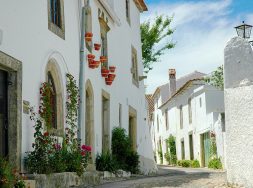
Elegant villas with splendid views over the bay grace the coastline and fascinating museums face onto intricately cobbled streets. Cascais offers world-class hotels, delightful restaurants, and lively nightlife, all with the traditional Portuguese touch. However, Cascais is still a fishing village. Fishermen push their boats off the beaches at sunrise and return with their catch of dorado, róbalo, sardines, octopus, crabs, and mussels; after which they gather hospitably around tables on the dock for a lunch of local wine, fresh bread, and fish soup served from enormous pots.

The town is charmingly set among the beaches of the Portuguese Riviera, from the relaxing swimming beaches of Cascais itself to the wide surfing beaches set against the dramatic natural scenery of the untamed Serra de Sintra in the north.Day trips are available to Ericeira, Praia das Maçãs, and Sintra. Midway between Cascais and Sintra lies the rugged wind-swept headland of the Cabo de Roca. A lighthouse, cafe, and gift shop are the simple marks of civilisation in this wind-scoured meeting of land and surf. Mainland Europe terminates at the point where these wild cliffs jut out into the sea.For those of us who prefer to avoid the well-trodden tourists haunts there are hiking trails following ancient paths along the cliff-tops. These lead to coves with unsullied beaches such as the Praia da Ursa or Praia da Adraga.Cascais has a wonderful, moderate climate all year round with temperatures from 12 C to 25 C. Favorable sun and wind conditions make sailing, surfing, kite surfing, and windsurfing popular tourist activities in this region.

The Golden Visa program offers you much more than a brief holiday in this stunning area. Investing in property in Cascais and other parts of Portugal allows you a European Residence Permit Card and a Passport (Portugal) giving you the ability to live and travel all over Europe. Not only this but having an investor visa entitles you to live, travel, work or study in 26 EU Schengen Space countries. It is undoubtedly the opportunity of a lifetime.

cobble street

Lisbon’s property market shows signs of positive response to the COVID crisis.

trams

In this post we explore the outstanding potential of Prata Riverside Village, combining waterfront tranquility with urban convenience.

lagoon

Based on the article Why Portugal is too hot for some by Henrique Almeida for Bloomberg Portugal is sticking with its golden visa program even though locals are being squeezed. Ana Guerreiro points across the street at a handful of housing projects in Lisbon’s up-and-coming riverside neighborhood of Marvila. It’s where she moved in with her mother last year […]

Categories
News Non Habitual Residence Tax Portugal Real Estate Investment Portugal

Benefits and Opportunities under Portugal’s Golden Visa

Explore the Benefits and

Opportunities

Offered by Portugal’s Golden Visa

Portugal offers a host of benefits under the Golden Visa regime, not least EU citizenship, which opens up a vast number of opportunities for study and travel, both for you and your family.

As a retirement option, Portugal offers a welcoming atmosphere to ex-pats, excellent tax benefits, prime health-care, and opportunities for travel. The Golden Visa is also an uncomplicated, flexible and speedy way of gaining Portuguese citizenship and a stepping stone into other Schengen countries. It is hands-down the best option for Golden Visa investment.

Invest a minimum of EUR 350,000 in a Portuguese Investment fund

over a period of 5 years.


Advantages

Member of the Schengen Area and the EU

Right to live, work and study in Portugal

Pathways to obtaining Permanent Residency and Citizenship in Portugal after 6 years

And Other Benefits

High standard of education and healthcare

Visa-free travel within the Schengen Countries

Short physical residency requirement

No language, education or management requirements

Dependents

  • Spouse
  • Dependent children under 26 as long as they are single and enrolled as full-time students.
  • Parents of either spouse if over 66 years oldor 55 and dependent.

Portugal’s Golden Visa scheme is a five-year residency-by-investment program designed for non-EU nationals. If the investment is held for at least five years, permanent residency or citizenship is possible. The Golden Visa opens a number of doors to qualifying investors and their family members giving them the right to live, work and study in Portugal while also permitting free movement in Europe’s Schengen area.

Golden Visa requirements for Portugal

In order to qualify for the program, you need to meet the following requirements:

Be either non-EU, non-Swiss, or non-EEA.

Make a minimum investment of €350,000.

Have a clean criminal record.

Spend a minimum of seven days in Portugal for the first year, then no less than 14 days each subsequent two-year period.

Golden Visa Opportunities and Benefits

Portugal has become especially desirable to foreign investors as a European Union country offering a great number of opportunities and benefits under the Golden Visa program.

5 years until you qualify for a European passport providing access to 26 nations in the EU and visa-free travel to 183 nations

Affordable investment options in real estate starting from €280,000

Under the NHR the Non Habitual Resident option, you pay little or no tax for 10 years.

Portugal is a member both of the EU and the Schengen area. With ten ports, 6 airports, and an excellent road network she is in easy reach of Europe and the world. As of 7th July 2020, The Henley Passport index ranked Portugal 6th in the world for visa-free travel allowing Portuguese citizens visa-free or visa on arrival access to 186 countries and territories.

Education for Golden Visa Dependents

Every applicant and their dependents have a right to study under the Golden Visa Program at the same cost as permanent residents or citizens.

Public schools, with tuition in Portuguese, are free to those between the ages of 5 – 18 years. Private schools pay in accordance with the academic structure under which they study, whether UK, US, or France.

There are more than 300 top quality institutions of higher education in Portugal from which college students can benefit that factor amongst the top 1000 worldwide.

University Study under Golden Visa

Under the international Student Statute, Golden Visa dependents can also study in a Portuguese university. The Student Statute, under Portuguese law, allows for non-European citizens to apply through a special enrolment application if certain requirements are metsuch as a full, secondary education or a recognised equivalent.

Some Portuguese universities have established ties with other institutions in various parts of the globe to facilitate transfers to an equivalent degree, allowing for credits on subjects taken.